
One pedal driving is an EV driving mode that lets you speed up, slow down, and often come to a complete stop using mostly the accelerator pedal. Press the accelerator to go. Ease off and the car slows through regenerative braking. Lift off fully and many EVs will slow hard enough to stop without touching the brake pedal in normal traffic.
You still have a brake pedal, and you still need it for emergency stops, slippery roads, steep grades, and situations where the car’s regenerative braking is limited. The daily benefit is smoother stop-and-go driving. The daily tradeoff is that it changes your muscle memory.
| Question | Short answer | Why it matters |
|---|---|---|
| What is one pedal driving? | A mode that uses accelerator-pedal position to control acceleration and strong deceleration. | In traffic, you can often drive without moving your foot back and forth to the brake pedal. |
| Does it replace brakes? | No. Every road EV still has conventional friction brakes. | You must use the brake pedal for hard stops and when regen is limited. |
| Does it add range? | It can recover energy when you need to slow down, especially in city driving. | Coasting can be more efficient when you do not need to slow down. |
| Which cars have it? | Many EVs offer it under names such as e-Pedal, One Pedal Drive, i-Pedal, or One-Pedal Driving. | The feel differs by brand, so a test drive matters. |
How does one pedal driving work in an EV?
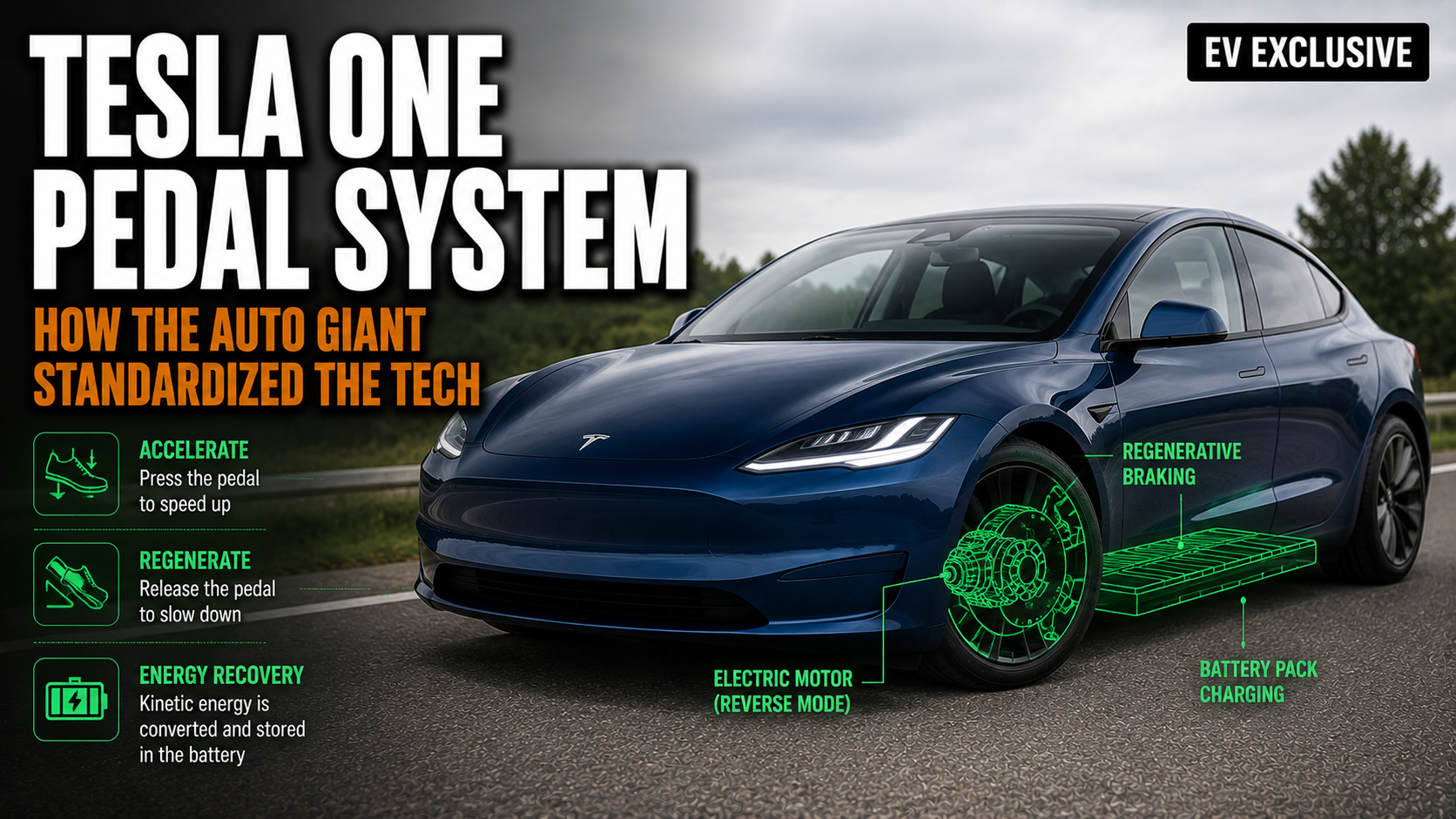
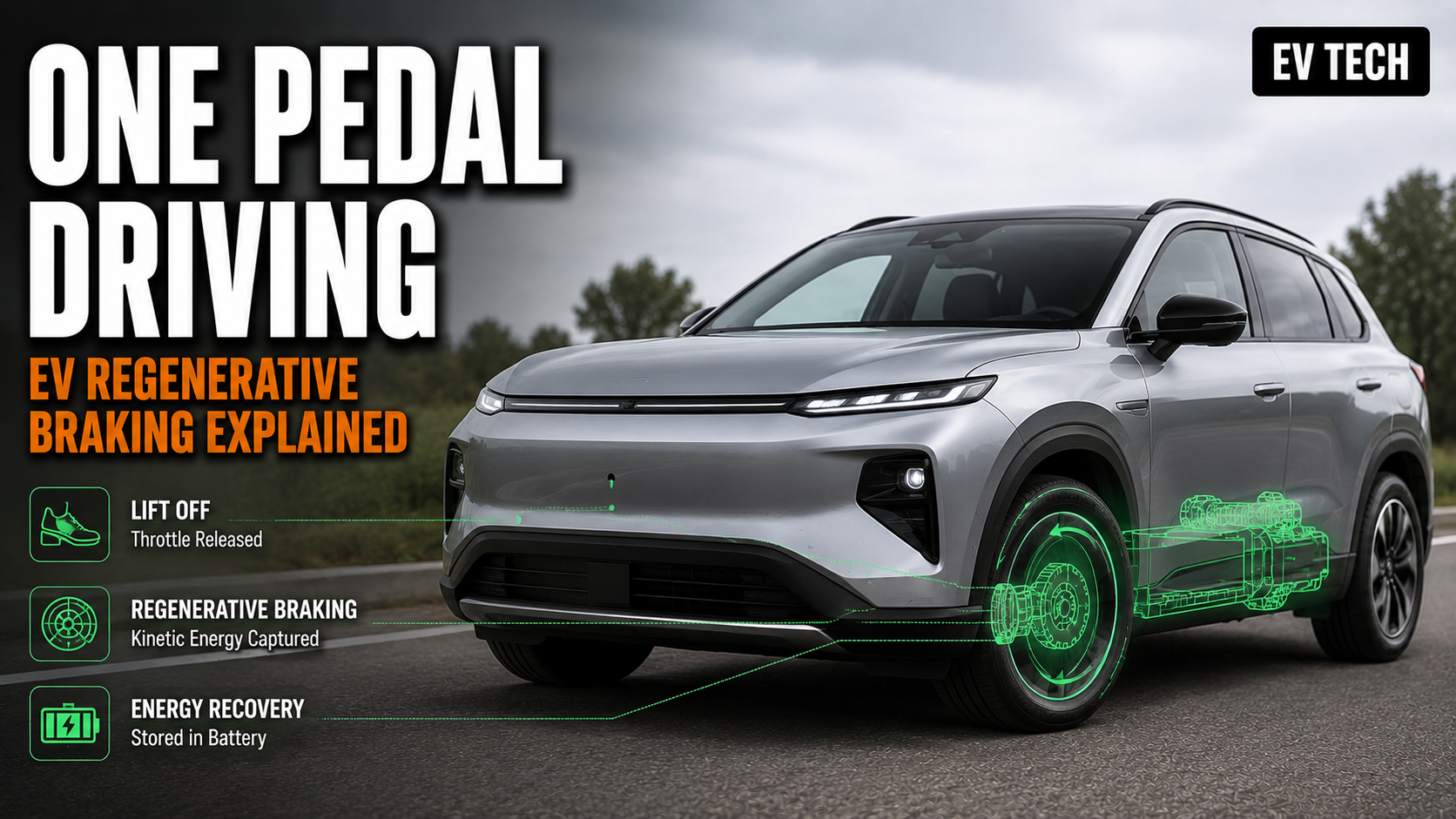
One pedal driving works by linking accelerator lift-off to regenerative braking. When you reduce pressure on the accelerator, the electric motor changes roles and resists the wheels. That resistance slows the car and sends some energy back to the battery.
Cars.com explains the basic idea well: one-pedal driving lets the accelerator handle both speeding up and slowing down under most conditions, while the brake pedal remains available for harder stops. In an electric car, the traction motor can act as a generator when the wheels keep turning through the car’s momentum. The motor’s resistance creates deceleration.
The feature feels strange at first because the accelerator becomes more sensitive. In a gas car with an automatic transmission, lifting off the accelerator usually gives light engine braking or a coast. In a one pedal driving EV, lifting off can feel closer to a moderate brake application. Your foot learns a new middle zone: press for power, hold steady for speed, ease up for gentle slowing, lift more for stronger slowing.
True one pedal driving mode usually adds a final stop-and-hold behavior. Nissan says the 2024 Leaf’s e-Pedal system can slow or stop the vehicle, or keep it stopped, by operating only the accelerator pedal. Ford says the Mustang Mach-E can speed up, slow down, and stop using only the accelerator pedal when One Pedal Drive is active, with limits for steep grades and other situations.
One pedal driving vs regenerative braking
Regenerative braking is the technology. One pedal driving is one driver interface built on top of it. An EV can have regenerative braking without having a strong one pedal driving mode.
This distinction matters because many drivers assume one pedal mode is the only way an EV recovers energy. It is not. Car and Driver notes that EV makers use different regen strategies: some put most regen into accelerator lift-off, some blend most regen into the brake pedal, and many use both. So a Porsche-style coast-focused EV can still recover energy when you press the brake pedal. A Tesla-style high-regen EV asks you to manage more of the deceleration through accelerator lift-off.
The practical difference shows up in your right foot. In a high one pedal driving mode, you plan stops by easing off early. In a blended-brake EV, you may coast more and use the brake pedal for regen. Both can be efficient when used smoothly. The waste comes from repeatedly accelerating, slowing too hard, then accelerating again.
For daily commutes, one pedal driving is strongest in city and suburban traffic with frequent slowdowns. It is less useful on a steady highway cruise because there are fewer braking events to recover energy from. On open roads, smooth coasting often beats unnecessary regen because every energy conversion has losses.
Does one pedal driving make EVs more efficient?
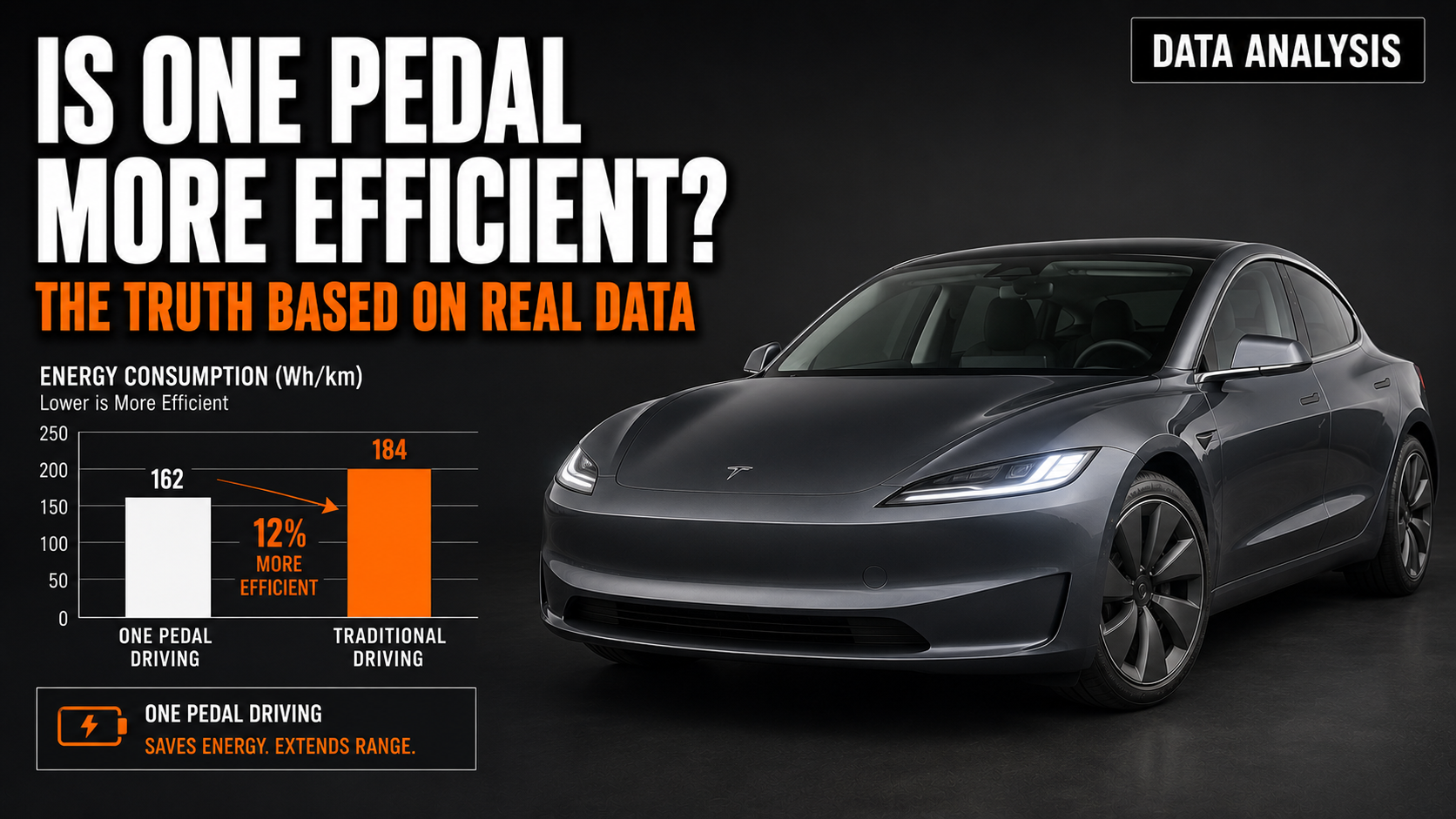
One pedal driving can improve efficiency when it helps you replace friction braking with regenerative braking. It does not make slowing down free. The cleanest efficiency habit is still smooth driving: look ahead, avoid hard acceleration, avoid late braking, and use momentum when traffic allows.
Car and Driver makes the key point: regen is better than turning motion into heat through friction brakes when you must slow down, but coasting can be more efficient than regen if you do not need to slow down . That is why some EV brands let the car glide when you lift off the accelerator, while others prefer a strong one pedal feel.
The commute use case is easy to see. In downtown traffic, school pickup lines, parking garages, and stoplight-heavy roads, you are constantly slowing. One pedal driving can recover some of that energy and reduce brake-pad use. On a 40-mile freeway commute with light traffic, one pedal mode may matter little because the car spends most of its time holding steady speed.
Do not chase the strongest regen setting just because it feels technical. A smoother driver in a low-regen setting can beat a jerky driver in the highest setting. The range screen rewards calm speed changes, not aggressive lift-off.
How one pedal driving changes daily commuting
One pedal driving changes daily commuting by reducing pedal switching. In stop-and-go traffic, your foot stays on the accelerator and makes small pressure changes instead of jumping between accelerator and brake. After a few days, many drivers time stoplights and traffic gaps with small ankle movements.
This is why the feature has such loyal fans. It makes EVs feel precise at low speed. Parking-lot crawling, creeping through a drive-through, or closing a small gap in traffic can become easier once your foot is trained. The car responds immediately when you reduce pressure, so you spend less time reacting late.
The learning curve is real. New drivers often lift off too quickly, causing passengers to feel a forward pitch. The fix is to treat the accelerator as a speed control, not an on/off switch. Ease off in stages. Keep light pressure while approaching a stop, then release more near the end. You will also need to relearn how the car behaves when reversing, because some one pedal systems are limited or unavailable in reverse.
One pedal driving also changes how you follow traffic. You may naturally leave a little more room because the car slows the moment you ease off. That can make commuting calmer. It can also annoy a passenger if your right foot is abrupt. Smoothness is the test.
When should you turn one pedal driving off?
Turn one pedal driving off, or use a gentler regen setting, when the road is slippery, you are learning the car, passengers feel motion sick, or you want to coast on an open road. Some owner manuals also warn that the system has limits on steep grades, with heavy loads, or when other driver-assistance systems are active.
Ford’s Mustang Mach-E manual is blunt about safety. It says One Pedal Drive is an extra driving aid, does not replace attention or judgment, and does not remove the need to apply the brakes. The same manual says the car may not come to a complete stop on steep grades and that increased vehicle load may reduce the accelerator’s ability to slow the vehicle.
Chevrolet’s Equinox EV quick-start guide says One-Pedal Driving is not recommended for slippery road conditions such as wet, snowy, or icy roads, and that steep hills may require more frequent brake-pedal use. That is sensible advice for any EV. Regen braking is usually applied through the driven wheels, so traction and stability systems still matter.
You may also want a lower setting during your first week with an EV. Start with normal regen, then try one pedal mode in an empty lot or quiet neighborhood. Learn how much distance the car needs to stop from 25 mph, 40 mph, and 55 mph. Your foot will adapt faster when you test it deliberately.
What happens when the battery is full or cold?
One pedal driving can feel weaker when the battery is full or cold because the battery may not be able to accept as much regenerated energy. In that case, the car may reduce regenerative braking or blend in friction brakes to keep the deceleration feel consistent.
This is one of the most useful details for new EV owners. If you charge to 100% overnight, leave the house, and expect maximum regen at the first stop sign, the car may behave differently. A full battery has less room to accept recovered energy. A cold battery can also limit charge acceptance until it warms up. Some EVs warn you through a dashboard message or regen indicator.
A Chevrolet Silverado EV quick reference document says regenerative braking may be limited when the propulsion battery is near full charge or cold, and gives the same warning for One-Pedal Driving . Ford also warns that one pedal behavior has limits, including steep grades and vehicle load.
The safe habit is simple: always be ready to brake. If regen feels weaker than usual, press the brake pedal. The friction brakes are still there.
Do brake lights turn on during one pedal driving?
Brake-light behavior during one pedal driving depends on vehicle design and deceleration level. In many EVs, brake lights illuminate during strong regenerative deceleration even when your foot is not on the brake pedal. Some tested vehicles have shown less clear behavior, which is why owners should verify how their own car works.
This question matters because the driver behind you needs warning when your EV slows quickly. Consumer Reports tested EV brake-light behavior and found that some Hyundai, Kia, and Genesis models did not illuminate brake lights during rapid deceleration unless the driver fully removed their foot from the accelerator. That does not mean every EV has the same issue. It means the behavior is worth checking.
The quick driveway test is easy. At night or in a garage reflection, turn on one pedal driving, move slowly, and ease off the accelerator. Watch when the brake lights illuminate. Then repeat with a stronger lift-off. You can also ask another person to follow at low speed in a safe area and report what they see.
For commuting, the best fix is spacing. Do not rely on brake-light logic to manage tailgaters. Leave room, slow smoothly, and use the brake pedal when you need a clear stop signal or stronger braking.
Which one pedal driving cars use different names?
One pedal driving cars do not all use the same label. Nissan uses e-Pedal on the Leaf. Ford uses One Pedal Drive on the Mustang Mach-E. Chevrolet and Cadillac use One-Pedal Driving on several EVs. Hyundai and Kia commonly use i-Pedal on models such as the Ioniq and EV lineups. Tesla has long used strong lift-off regen behavior, with settings that vary by model year and software.
| Brand or model family | Common label | What to check on a test drive |
|---|---|---|
| Nissan Leaf | e-Pedal | Whether it stops and holds smoothly, and how it interacts with ProPILOT or cruise control. |
| Ford Mustang Mach-E | One Pedal Drive | How it stops on hills, whether the setting stays on, and whether passengers find it smooth. |
| Chevrolet and Cadillac EVs | One-Pedal Driving, Regen on Demand | Menu location, steering-wheel regen paddle behavior, and cold/full battery limits. |
| Hyundai and Kia EVs | i-Pedal or regen levels | Brake-light behavior, paddle settings, and whether the preferred mode persists after restart. |
| Tesla EVs | Strong regenerative braking, Hold behavior | Low-speed stopping feel, regen limits in cold weather, and brake blending behavior by model year. |
MotorTrend calls one pedal driving a fragmented EV feature because each automaker tunes it differently and places the controls in different spots. Some cars use paddles. Some use an infotainment menu. Some remember your setting. Some reset it after each drive. Some stop fully. Some creep at the end.
This is why “one pedal driving cars” is a test-drive question, not just a spec-sheet question. Spend 10 minutes in traffic, 5 minutes on a hill, and 5 minutes in a parking lot. You will know quickly whether the tuning suits you.
Is one pedal driving safe?
One pedal driving is safe when the driver understands its limits and keeps using the brake pedal when needed. It becomes risky when a driver treats regen as a full braking system, follows too closely, or forgets that the car may decelerate differently when traction, temperature, grade, or battery state changes.
Every EV with one pedal driving still has a brake pedal and conventional brakes. The brake pedal is the safety control for sudden stops. Ford’s manual says the system does not automatically brake the vehicle and warns that failing to press the brake pedal when necessary can lead to a collision.
For new owners, the safest approach is gradual:
- Learn the setting on dry roads first.
- Leave extra following distance while your foot adapts.
- Use the brake pedal whenever traffic becomes unpredictable.
- Turn the setting down in snow, ice, heavy rain, or steep hills.
- Test brake-light behavior and stopping feel in a safe area.
The feature should make commuting calmer. If it makes you tense, jerky, or late on braking, reduce the regen setting.
Not for you
One pedal driving may be a bad fit if you like long coasting, drive mostly steady-speed highways, get motion sick easily, or share the car with someone who finds strong lift-off braking unsettling. It can also be a poor default for snowbelt drivers who frequently start the day on icy residential roads.
Here is the line many EV fans skip: if one pedal mode makes your passengers’ heads move at every stoplight, you are using it poorly. Turn it down and relearn the pedal before blaming the car.
It may also be the wrong setting for a teen driver during early practice. Learning normal brake-pedal habits still matters because every emergency stop uses the brake pedal. One pedal driving is useful after the driver understands spacing, braking pressure, and how the vehicle responds in bad weather.