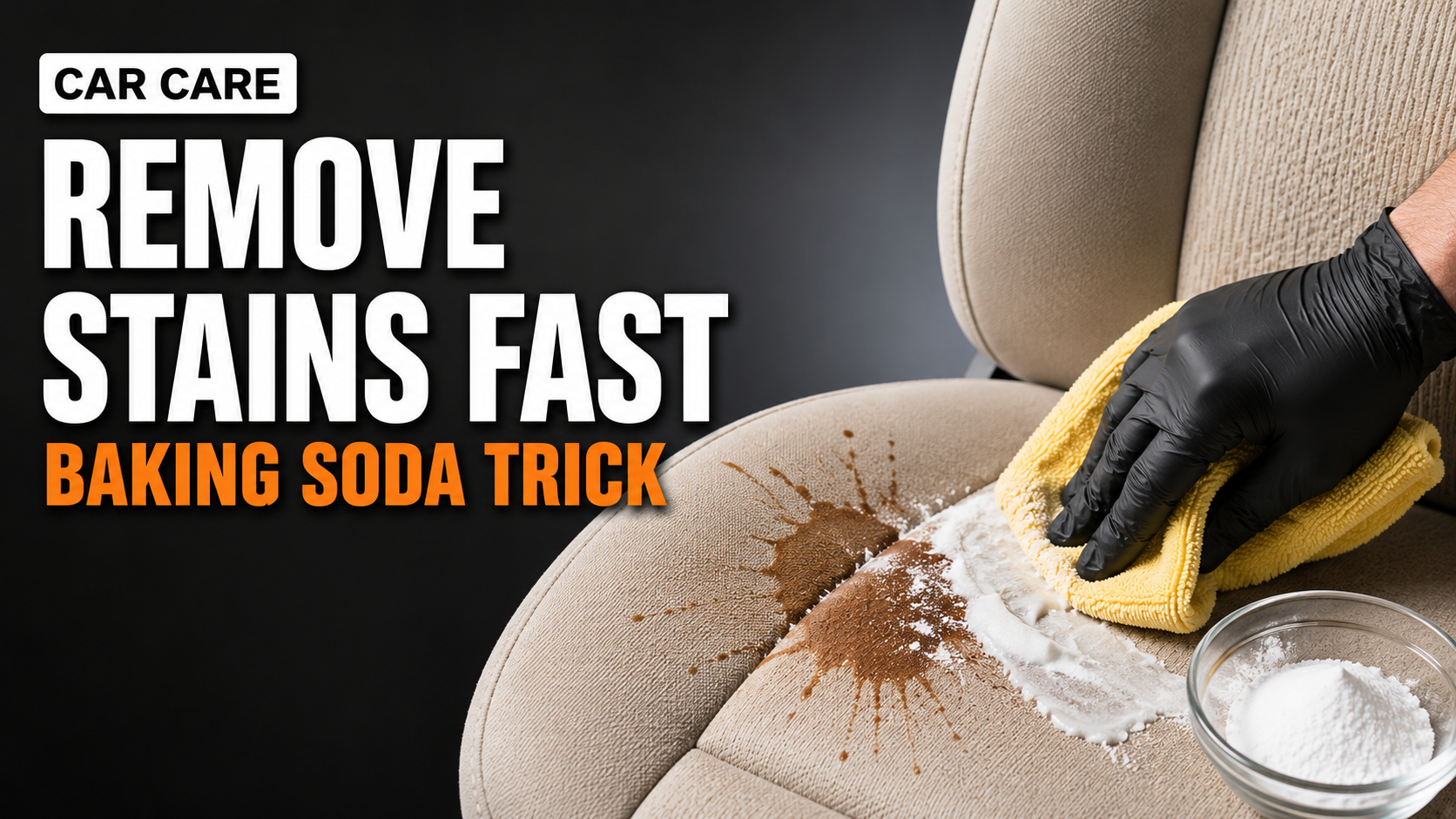

Baking soda removes most dried coffee stains from light cloth car seats, but only if you treat it differently than a fresh spill. A set-in stain needs a thicker paste, a longer dwell time, and this is the part almost every cleaning guide skips a mild acidic rinse afterward. Skip that last step on a beige or tan seat, and you risk the stain coming back as a dull brown ring days later, a problem detailers call wicking.
Here’s the fast version, then the full method below.
| Step | What to do | Why it matters on light fabric |
|---|---|---|
| 1. Test | Mix ½ tsp baking soda + ¼ cup water, dab a hidden spot, let dry | Light fabric shows discoloration and water rings far more visibly than dark fabric |
| 2. Paste | 3 parts baking soda : 1 part warm water, thick not runny | Dried tannins need a paste that stays put, not a spray that runs off |
| 3. Dwell | 20–30 minutes for set-in stains (not the 5–10 minutes fresh spills need) | Old stains have bonded to the fibers; they need longer contact time |
| 4. Agitate | Soft-bristle brush, circular motion, light pressure | A stiff brush on light, thin-weave cloth can fray fibers and leave a worn-looking patch |
| 5. Rinse | Damp microfiber with plain water, then a light vinegar-water wipe | The vinegar step is what prevents the brown “ghost stain” from re-emerging as it dries |
| 6. Dry | Fan or open windows, seat fully dry within 2–3 hours | Lingering moisture is what causes wicking and mildew odor on light cloth |
Why a Dried Coffee Stain Behaves Differently Than a Fresh One
Coffee contains tannins the same plant compounds that make tea and red wine notoriously hard to clean. While the spill is wet, tannins are still dissolved in liquid and haven’t fully attached to the fabric fibers. Once the coffee dries, those tannin molecules bond chemically to the cloth, and the sugars and any dairy in the coffee caramelize slightly as they dry, which is why an old coffee stain often looks darker and feels slightly stiff or crusty compared to the day it happened.
This matters for your cleaning approach in three concrete ways. First, a quick spray-and-blot the advice you’ll find for fresh spills won’t have enough contact time to break those bonds. Second, you’ll usually need two or three cleaning passes instead of one. Third, and this is the part light-fabric owners need to know: the same tannins that make the stain brown are also what causes the “ghost ring” effect if you don’t rinse the cleaning residue out completely. The stain looks gone when the fabric is damp, then reappears faintly as it dries.
Step 1: Test for Colorfastness Before You Touch the Stain
This step gets skipped constantly, and it’s the one that matters most on light upholstery. Dark fabric hides a slightly lightened test spot. Beige, tan, and cream fabric does not a missed test spot can leave a noticeably lighter patch that’s more obvious than the coffee stain ever was.
Mix half a teaspoon of baking soda into a quarter cup of warm water. Dab a small amount onto a hidden section of the seat under the headrest flap or along the very bottom edge near the seat track works well. Let it air dry completely, then check two things: did the color change at all, and is there a faint white mineral ring left behind from the water. If either shows up, dilute your mixture further before working on the visible stain. {{VERIFY: some fabric blends used in older vehicle interiors react differently to baking soda than newer synthetic weaves, manufacturer upholstery care guide, vehicle owner’s manual or manufacturer support site}}
Step 2: Vacuum First, Every Time
Run a vacuum with an upholstery or crevice attachment over the entire seat before applying anything wet. This isn’t just general tidiness any loose dirt, sugar crystals from the dried coffee, or crumbs sitting on top of the stain will turn into a gritty paste once they mix with your baking soda solution, and that grit is what actually scratches and dulls light-colored fabric during scrubbing. Vacuuming first also pulls up the dried, flaky top layer of the stain, which means your baking soda paste only has to work on what’s left bonded into the fibers, not the loose crust on top.
Step 3: Mix the Paste at the Right Ratio for a Set-In Stain
For a fresh spill, a thin, sprayable mix works fine. For a dried, bonded stain, you want a thicker paste that stays in contact with the fabric instead of sliding off. Use three parts baking soda to one part warm water roughly 3 tablespoons of baking soda to 1 tablespoon of water for a stain about the size of your palm. You’re aiming for a texture closer to wet sand than to a runny liquid; if it pools or drips when you tip the bowl, add a small pinch more baking soda.
| Stain severity | Baking soda : water ratio | Texture target |
|---|---|---|
| Light, recent (under a week old) | 2:1 | Spreadable, slightly wet sand |
| Moderate, set-in (a few weeks old) | 3:1 | Thick paste, holds its shape briefly |
| Heavy, deeply set (months old, visibly dark or crusty) | 3:1, applied in two separate rounds | Same paste, repeated after first round dries and is removed |
Mixing strength matters more than people assume one professional detailer working a six-month-old coffee-and-makeup stain on a Toyota Corolla’s cloth seat in a video review of cleaning methods diluted his all-purpose interior cleaner at 20:1 first, tested the result, then mixed it up to 15:1 only when the lighter dilution didn’t fully release the stain. The same logic applies to a baking soda paste: start at the gentler ratio, especially on light fabric, and only go stronger if the first pass doesn’t move the stain. Going straight to the strongest mix you can make is how people end up with a lightened patch instead of a clean seat.
Step 4: Apply and Let It Sit Longer Than You Think
Spread the paste directly over the stain with a soft cloth, an old toothbrush, or your fingers, working it gently into the fibers rather than just laying it on top. For a dried stain, plan on a 20 to 30 minute dwell time noticeably longer than the 5 to 10 minutes most fresh-spill guides recommend. The baking soda needs that time to draw moisture and bonded residue up out of the fibers; cutting the dwell time short is one of the most common reasons people report that baking soda “didn’t work” on an old stain when in fact it just needed more time.
For a genuinely stubborn stain the kind that’s been baking into a hot car interior for months one round often isn’t enough. Let the first application dry completely, vacuum off the dried residue, inspect the result, and repeat with a fresh paste if any discoloration remains. Doing two lighter passes is gentler on light fabric than trying to force a single, overly aggressive scrub to finish the job.
Step 5: Agitate With the Right Brush Not the Stiffest One You Own
This is where a lot of DIY attempts damage light, thin-weave fabric. A stiff bristle brush works faster on heavy-duty truck upholstery, but on the kind of light, often more delicate weave found in sedans and crossovers, a stiff brush can fray fibers, pull threads, and leave a slightly fuzzy or worn-looking patch exactly where the stain was trading one cosmetic problem for another.
Use a soft-bristle brush a horsehair detailing brush or even a soft toothbrush in small circular motions with light pressure. Only switch to a firmer brush for a few seconds on the single worst, most deeply set section of the stain, then go right back to the soft brush for the rest. A microfiber cloth alone, worked in tight circles, often finishes the last bit of a stain that the brush couldn’t fully release, since cloth fibers don’t carry the same risk of pilling the fabric.
Step 6: Rinse Correctly This Step Prevents the Brown Ring From Coming Back
Wipe away the baking soda residue with a clean, barely damp microfiber cloth, turning the cloth often so you’re not just smearing lifted residue back into the fabric. Then comes the step most baking soda guides leave out entirely: a light wipe with a mild acidic rinse, such as one part white vinegar to four parts water, applied sparingly with a fresh cloth.
Here’s why that step earns its place. Baking soda is alkaline. So is the residue left behind from many all-purpose cleaning sprays. As an alkaline residue dries on fabric, it can oxidize and turn brown the same chemistry that causes commercial carpet cleaning customers to see a faint brown stain reappear days after a professional steam clean, even when the extractor pulled up clean water during the job. A light acidic rinse neutralizes that alkaline residue before it has the chance to dry and oxidize, which is the difference between a stain that’s actually gone and one that quietly comes back as a faint ring once the seat dries out.
Use the vinegar rinse sparingly a light pass, not a second soaking. Too much moisture at this stage just reintroduces the over-saturation problem you’re trying to avoid.
Step 7: Dry the Seat Completely and Quickly
Light fabric that stays damp for hours is far more likely to develop a faint water ring, a musty smell, or in humid conditions, mold at the foam layer underneath the cloth. Open the windows or doors and point a small fan directly at the treated area; on a warm day, parking with the windows down for an hour or two will finish the job. Avoid direct, high heat from a hair dryer held close to the fabric it can set any remaining residue into the fibers before it’s fully lifted out, which works against everything the baking soda just did.
When Baking Soda Alone Isn’t Enough
Some stains need a second tool, especially ones that include milk, cream, or sugar along with the coffee. If a faint shadow remains after one full baking soda cycle:
- Add a drop of mild dish soap to your rinse water. Dish soap breaks down any oily residue from creamer that baking soda alone won’t fully lift.
- Try a diluted vinegar-and-water solution as a second pass, sprayed lightly and blotted, rather than scrubbed in useful for stains that have a slight greasy or dairy component.
- Use an enzyme cleaner specifically if there was milk or cream in the coffee. Enzymes break down the dairy proteins that baking soda and vinegar don’t directly target, and dairy is usually what causes a lingering sour smell even after the visible stain is gone.
- Stop scrubbing harder and call in steam or extraction help once you’ve done two careful passes without further improvement. At that point, more aggressive home scrubbing risks fraying light fabric for a stain that may need a wet/dry vacuum extractor or a professional detailer’s steam equipment to fully pull out.
Myths Worth Skipping
A few home remedies show up repeatedly in coffee-stain advice and deserve a quick reality check before you try them on light fabric.
Egg yolk as a stain lifter. This shows up in older cleaning folklore for tough fabric stains, but introducing a raw egg product onto a car seat risks adding a protein-based odor and residue problem on top of the coffee stain you’re already trying to remove. Skip it.
Talcum or baby powder on a wet stain. Some advice suggests pressing powder into a damp stain to draw out color the way it works on grease. Coffee tannins don’t lift the same way oil does, and powder pressed into damp cloth seats can leave its own residue trapped in the weave. Stick with baking soda, which is formulated for this kind of porous absorption and rinses out cleanly.
Bleach for a “deep clean.” Bleach on light fabric car seats is one of the few genuinely high-risk shortcuts in this space. It strips dye unevenly, especially on synthetic weaves common in factory cloth seats, and the result is rarely a clean white patch it’s usually a yellowed or blotchy one that’s far more visible than the original coffee stain.
Baking Soda vs. the Other Common DIY Methods
| Method | Best For | Main Tradeoff | Why It Matters on Light Fabric |
|---|---|---|---|
| Baking soda paste | Dried, set-in stains; also deodorizes at the same time | Needs a longer dwell time (20–30 min) and a follow-up rinse to avoid residue browning | Gentle, low-abrasion, and won’t strip dye if diluted correctly |
| Vinegar + water + dish soap | Fresh spills, or as a second pass after baking soda on greasy/dairy residue | Strong vinegar smell lingers until fully dried and aired out | Mildly acidic, so it’s actually useful as the rinse step that prevents browning |
| Enzyme cleaner | Stains with milk, cream, or sugar mixed into the coffee | Slower acting; needs to sit and break down proteins before blotting | Targets the dairy odor that baking soda and vinegar don’t fully resolve |
| Steam cleaning / extraction | Stains that have resisted two or more home attempts | Requires equipment most homeowners don’t own, or a professional visit | Effective, but introduces significant moisture riskier on light fabric without fast drying access |
| Bleach or high-alkaline carpet shampoo | Not recommended for light fabric car seats | High risk of uneven discoloration, especially on synthetic weaves | The exact opposite of what a light-colored seat needs |
The Browning Problem, Explained Properly
This deserves its own section because it’s the single most common reason DIY coffee-stain cleanup fails on light fabric, and almost no consumer-facing guide explains the mechanism.
When a cleaning solution is alkaline and many household and commercial upholstery cleaners are, baking soda included any residue left behind in the fibers can oxidize as it dries. On light fabric, that oxidation shows up as a faint brown or yellow tint exactly where the stain used to be, even though the actual coffee residue is long gone. This is well documented in commercial carpet cleaning circles, where customers sometimes see a treated stain reappear days after a professional steam clean pulled nothing but clear water out of the fabric during extraction the visible reappearance is residue oxidizing, not the original stain “coming back.”
The fix is the acidic rinse described in Step 6. A light pass of diluted white vinegar neutralizes the alkaline residue before it has the chance to dry and darken. Some professional-grade interior cleaning products include a peroxide-based finishing rinse specifically for this purpose, used as a final pass after shampooing to neutralize the cleaner and reduce the odds of residue wicking back up through the fabric as it dries. For a DIY baking soda approach, a dilute vinegar rinse does the same job at a fraction of the cost.
When This Isn’t the Right Fix
Baking soda is a strong, low-risk option for most dried coffee stains on light cloth seats but it isn’t the right tool in every case, and a guide that doesn’t say so isn’t being honest with you.
- If the stain is on Alcantara or suede-style microfiber inserts, skip the scrub-brush approach entirely. These materials need an antibacterial interior cleaner and an extractor rather than a baking soda paste worked in with a brush, since aggressive agitation can crush or mat the nap.
- If the seat has been sitting wet or damp for more than a day already, address moisture and mildew risk first. Adding more wet cleaning on top of existing dampness, especially on light fabric over foam padding, raises the odds of a musty smell that’s harder to fix than the original stain.
- If a previous cleaning attempt already left the area visibly lighter or with a hard, crusty residue, that’s a sign a stronger or wrong product was used before. In that case, more baking soda won’t reverse existing damage, and you’re better off having a detailer assess whether the discoloration is fixable.
- If you only have a few minutes before someone needs to sit in that seat, baking soda’s 20–30 minute dwell time won’t fit your timeline a quick vinegar-and-water blot is the better short-term move, with a proper baking soda treatment later.
Frequently Asked Questions
Does baking soda actually remove old, dried coffee stains from car seats, or only fresh ones?
It works on both, but the method has to change. Fresh spills need a quick, thin solution and a short dwell time. Dried stains need a thicker paste and 20 to 30 minutes of contact time because the tannins have already bonded to the fabric fibers.
Why did my coffee stain come back as a faint brown ring after I cleaned it?
This is almost always residue oxidation, not the original stain reappearing. Alkaline cleaning residue including from baking soda can darken as it dries if it isn’t rinsed out. A light pass with diluted white vinegar after cleaning neutralizes that residue and prevents the brown ring.
How long should I leave a baking soda paste on a dried coffee stain?
Plan for 20 to 30 minutes for a genuinely set-in stain, longer than the 5 to 10 minutes recommended for fresh spills. If the stain is heavily set in after months, two shorter applications are gentler on light fabric than one extra-long one.
Is baking soda safe on light-colored or beige cloth car seats specifically?
Generally yes, but always run the colorfastness test first. Light fabric shows both bleaching and water-ring damage far more visibly than dark fabric, so the spot test in Step 1 matters more here than it does on darker upholstery.
What if the stain keeps reappearing every time the seat dries (wicking)?
This is the browning/oxidation issue described above. Make sure you’re rinsing thoroughly with plain water after the baking soda treatment, finishing with a light vinegar rinse, and drying the seat quickly with a fan or open windows rather than letting it air dry slowly in a closed car.
The Bottom Line
A dried coffee stain on a light fabric car seat responds well to baking soda, but only if you treat it like the set-in stain it actually is: a thicker paste, a real 20-to-30-minute dwell time, gentle agitation with a soft brush, and the step that separates a clean seat from one with a ghost stain a week later a light acidic rinse before you let it dry. Test for colorfastness first, work in patient passes rather than one aggressive scrub, and dry the seat fast. Do that, and even a stain that’s been sitting for months has a real shot at coming out clean.