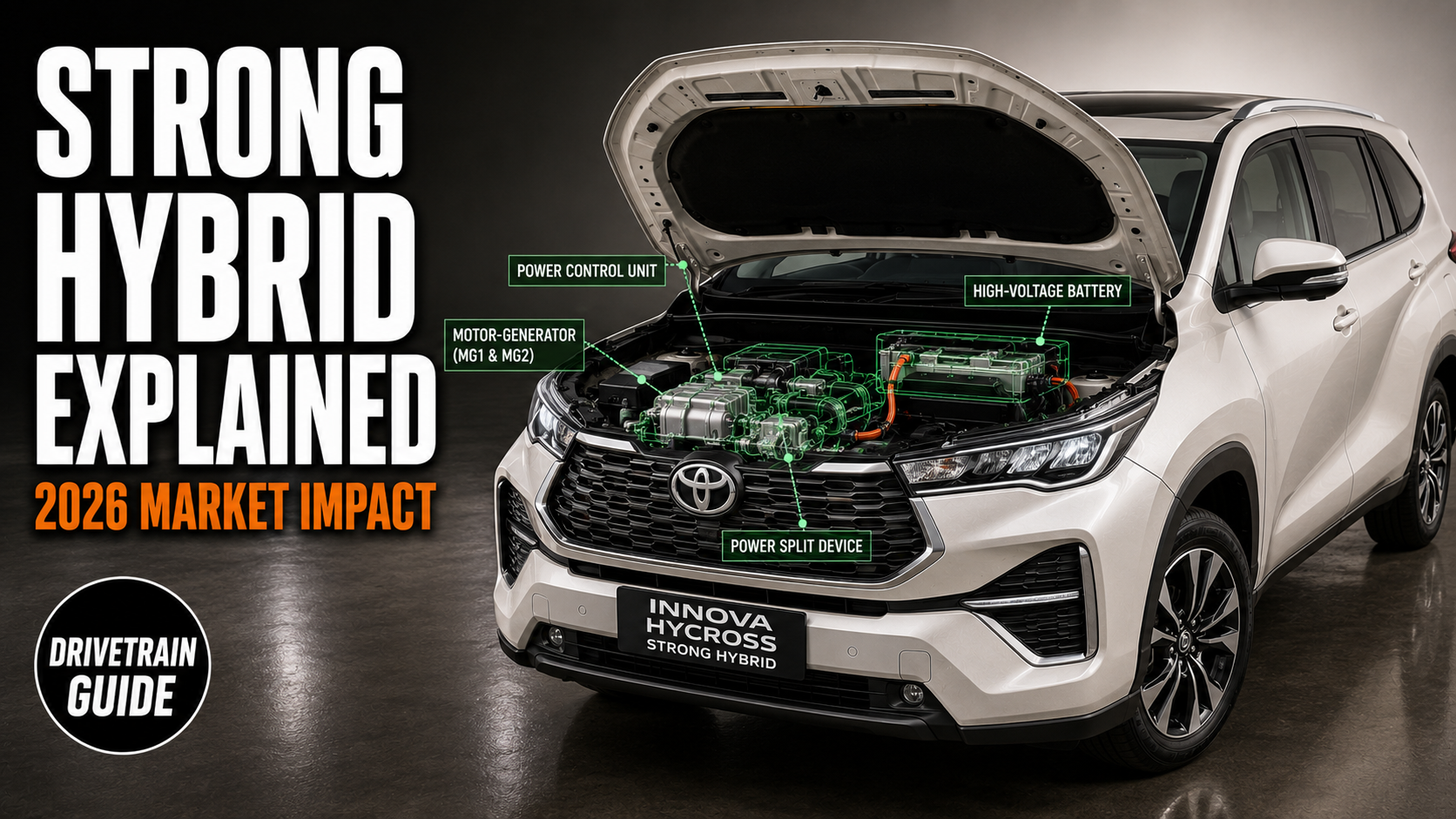

A strong hybrid, often referred to as a Full Hybrid Electric Vehicle (FHEV), is a vehicle that utilizes both an internal combustion engine (ICE) and a powerful electric motor to drive the wheels. The defining characteristic of a strong hybrid technology is its ability to operate on pure electric power (EV mode) for short distances, typically during low-speed city driving or idling, without any assistance from the gasoline engine.
Unlike mild hybrids, which only provide a small electric boost to the engine, a strong hybrid vehicle can decouple the engine entirely. It is a self-charging system that never needs to be plugged in; it captures energy through regenerative braking and uses the engine as a generator to keep the high-voltage battery pack charged.
Hybrid Type Comparison
| Feature | Mild Hybrid (MHEV) | Strong Hybrid (SHEV) | Plug-in Hybrid (PHEV) |
|---|---|---|---|
| Pure EV Driving | No | Yes (Low speed/Short range) | Yes (Long range/High speed) |
| Battery Voltage | 12V – 48V | 100V – 300V+ | 300V – 400V+ |
| External Charging | No | No | Yes |
| Best For | Lowering emissions slightly | Heavy city traffic | Daily EV commuting |
| Cost Premium | Low ($500 – $1,500) | Medium ($2,000 – $4,000) | High ($5,000 – $10,000) |
What Do You Mean by Strong Hybrid? The Core Definition
To truly understand what is strong hybrid, you must look at the “degree of hybridization.” In automotive engineering, this refers to how much of the vehicle’s total power output can be handled by the electric motor. A strong hybrid is a “Full Hybrid” because its electric motor is powerful enough to propel the entire mass of the vehicle independently.
In 2026, the term has evolved to imply a vehicle that achieves at least 40% – 50% thermal efficiency by utilizing a series-parallel drivetrain. This means the car can run as an electric car, a gasoline car, or both simultaneously, depending on the load and battery state.
How Strong Hybrid Technology Works: The Mechanics
The “magic” of a strong hybrid vehicle lies in its Power Split Device (PSD). Usually centered around a planetary gear set, this device manages the flow of energy between the engine, the motor-generator (MG1), and the traction motor (MG2).
- Low Speed / Reverse: The car operates solely on the traction motor (MG2), drawing energy from the Lithium-ion battery. The engine remains off.
- Normal Driving: The engine starts and its power is split. Part of the power drives the wheels directly, while the rest spins MG1 to generate electricity for MG2 or to charge the battery.
- Full Acceleration: Both the engine and MG2 provide maximum torque to the wheels. This is where strong hybrids often feel punchier than standard petrol cars.
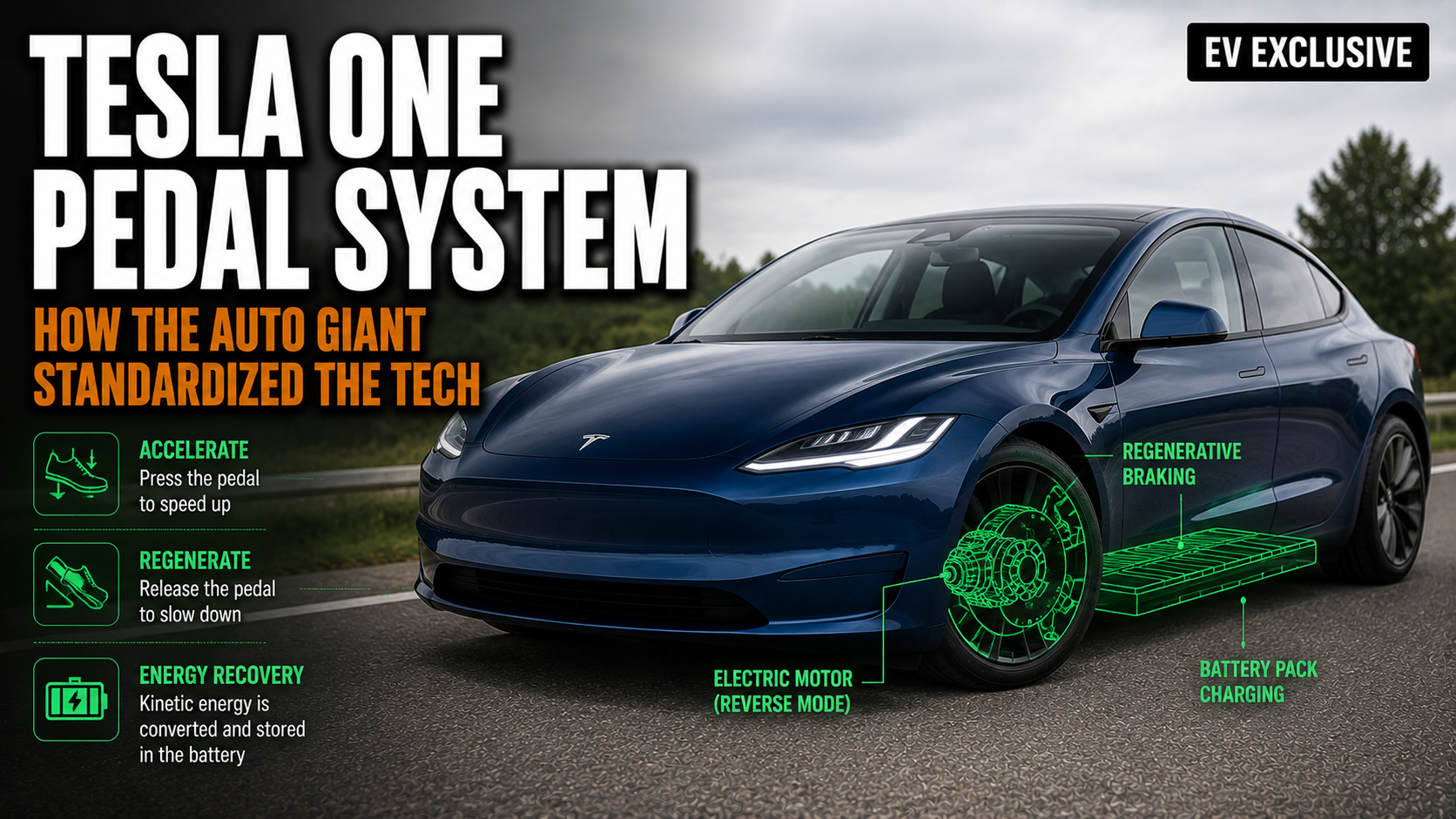
- Regenerative Braking: When you lift off the accelerator, the motor reverses its role, acting as a generator to convert kinetic energy back into electricity.
The “Rubber Band Effect” in 2026
Early strong hybrids were criticized for the “rubber band effect” caused by e-CVT transmissions, where engine RPM doesn’t match vehicle speed. 2026 models from manufacturers like Toyota and Hyundai have mitigated this using simulated shift points and active noise cancellation, making the drive feel more traditional and engaging.
Strong Hybrid vs. Electric Vehicle: The 2026 Perspective
With the 2026 shift toward solid-state and high-density LFP batteries, many ask: why buy a hybrid when EVs are improving? The answer lies in infrastructure and “cold-start” efficiency.
- Infrastructure: In regions where high-speed charging is scarce, a strong hybrid offers 900km+ of range with a 5-minute refuel time.
- Weight: A 2026 strong hybrid typically weighs 200kg – 400kg less than a comparable long-range EV, leading to better handling and less tire wear.
- Cold Weather: Hybrids use engine waste heat to warm the cabin, whereas EVs must use battery power, often losing up to 30% of their range in winter.
The Financials: Is a Strong Hybrid Worth the Premium?
The “Hybrid Premium” is the extra cost you pay upfront compared to a non-hybrid model. In 2026, this gap has narrowed but remains significant.
Payback Period Analysis (Example)
Assume a standard SUV costs $30,000 (25 MPG) and the Strong Hybrid version costs $33,500 (50 MPG).
- Annual Fuel Cost (15,000 miles at $4/gal):
- Standard: $2,400
- Hybrid: $1,200
- Annual Savings: $1,200
- Payback Time: 2.9 years
Information Gain Tip: Most people forget that hybrids have higher resale values. In the 2026 used car market, strong hybrids are retaining 15% more value than pure ICE vehicles due to tightening emission zones in major cities.
When to Skip the Strong Hybrid
Despite the efficiency, a strong hybrid vehicle is a bad investment in specific scenarios:
- Pure Highway Cruising: If your commute is 95% highway at speeds above 110km/h (70mph), the electric motor becomes dead weight. The engine has to work harder to carry the battery, and you may see worse mileage than a modern turbocharged petrol or diesel car.
- Very Low Mileage: If you drive less than 8,000km (5,000 miles) per year, you will never recover the $3,000+ premium through fuel savings.
- Towing Heavy Loads: While some SHEVs can tow, the e-CVT transmissions often struggle with sustained high-torque demands compared to traditional torque-converter automatics.
FAQ: What is Strong Hybrid?
What is the main difference between a mild and strong hybrid?
The primary difference is that a strong hybrid can drive on electricity alone, while a mild hybrid can only assist the engine. A strong hybrid has a much larger battery and a more powerful motor.
Do I need to charge a strong hybrid?
No. Strong hybrids are self-charging. They charge their batteries through regenerative braking and by using the internal combustion engine as a generator.
Which is better: Strong Hybrid or PHEV?
It depends on your lifestyle. If you can charge at home and drive less than 50km a day, a PHEV is better. If you cannot charge at home or frequently take long trips, a strong hybrid is more convenient and usually lighter.
How long do strong hybrid batteries last?
Most manufacturers in 2026 offer warranties for 8 to 10 years or 150,000 miles. Modern liquid-cooled battery packs are designed to last the life of the vehicle.


《What is a Strong Hybrid? Definition, Mechanics, and 2026 Market Impact》有2条评论