
Electric vehicles (EVs) are heavy. A dual-motor electric SUV or pickup truck weighs significantly more than a gasoline-powered equivalent. This mass changes how vehicles slow down, stop, and manage heat. Modern manufacturers use regenerative braking to control this weight, allowing drivers to slow down without using the traditional brake pedal.
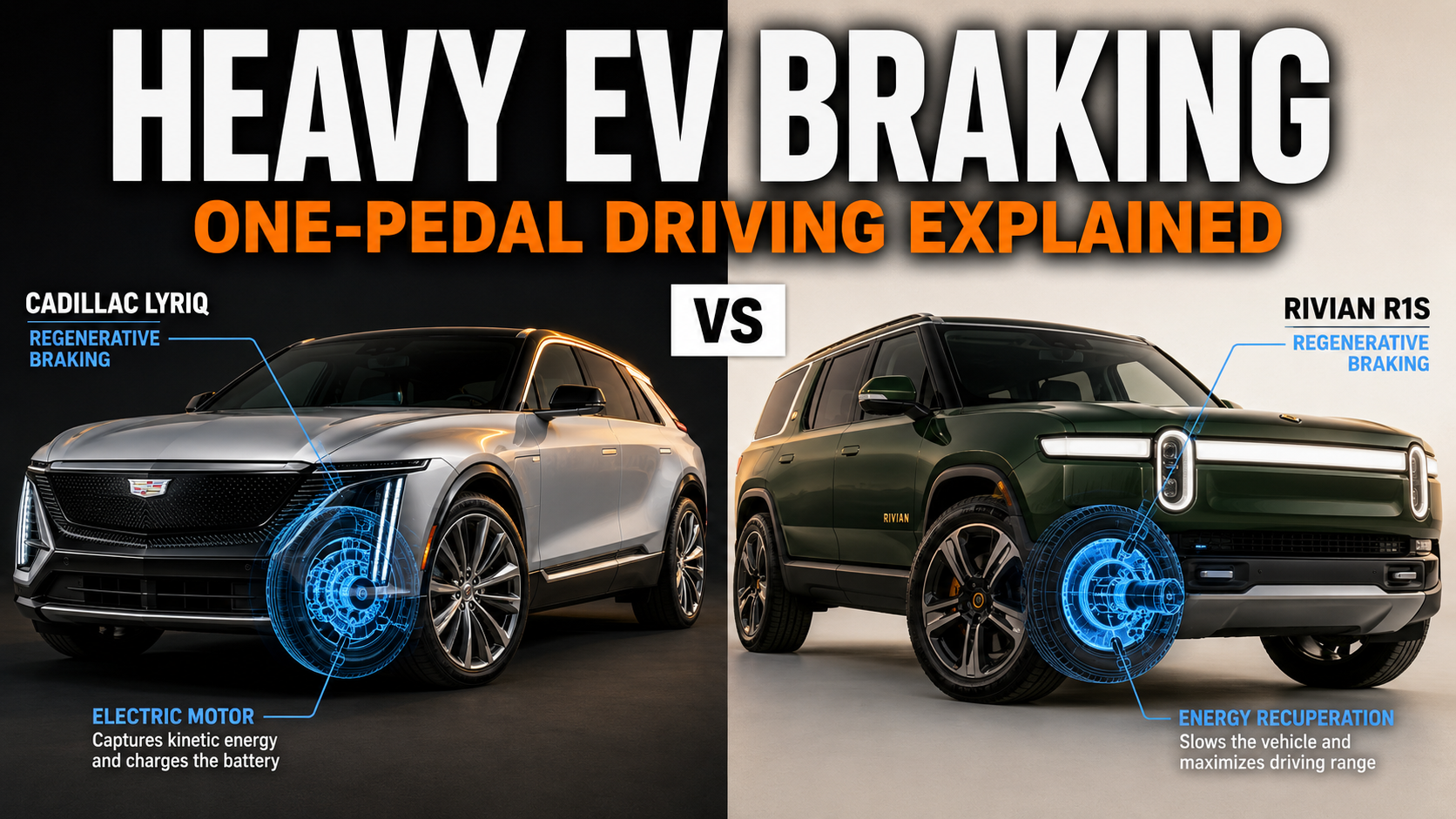
Both the Cadillac Lyriq and Rivian R1T or R1S use one-pedal systems to recapture energy and manage deceleration. However, their engineering choices differ. Rivian uses automatic software blending to manage limits, while Cadillac provides a physical pressure-sensitive paddle on the steering wheel. Understanding these systems helps drivers maintain control and prolong brake component life.
Quick Comparison of Heavy EV Braking Systems
The table below compares the braking specifications and features of the Rivian R1T/R1S and the Cadillac Lyriq.
| Specification / Feature | Rivian R1T / R1S | Cadillac Lyriq (AWD) | Typical ICE Mid-Size Truck/SUV |
|---|---|---|---|
| Curb Weight | 7,148 lbs | 5,789 lbs | 4,500 – 4,800 lbs |
| OPD Control Method | Standard / High settings in screen menu | Normal / High settings in screen menu | None (Friction Only) |
| Friction Brake Blending | Regenerative Brake Assist (automatic blending) | Electronic Brake Control (blended system) | None |
| Manual Controls | None (Pedals Only) | Steering Wheel Pressure Paddle | Traditional Brake Pedal Only |
| Deceleration Rate | Up to 0.25g (High Mode) | Up to 0.3g (High Mode with Paddle) | Variable by foot pressure |
| Estimated Pad Lifespan | 90,000 – 120,000 miles | 80,000 – 100,000 miles | 35,000 – 60,000 miles |
The Physics of Stopping Heavy EVs: Why Weight Changes Braking
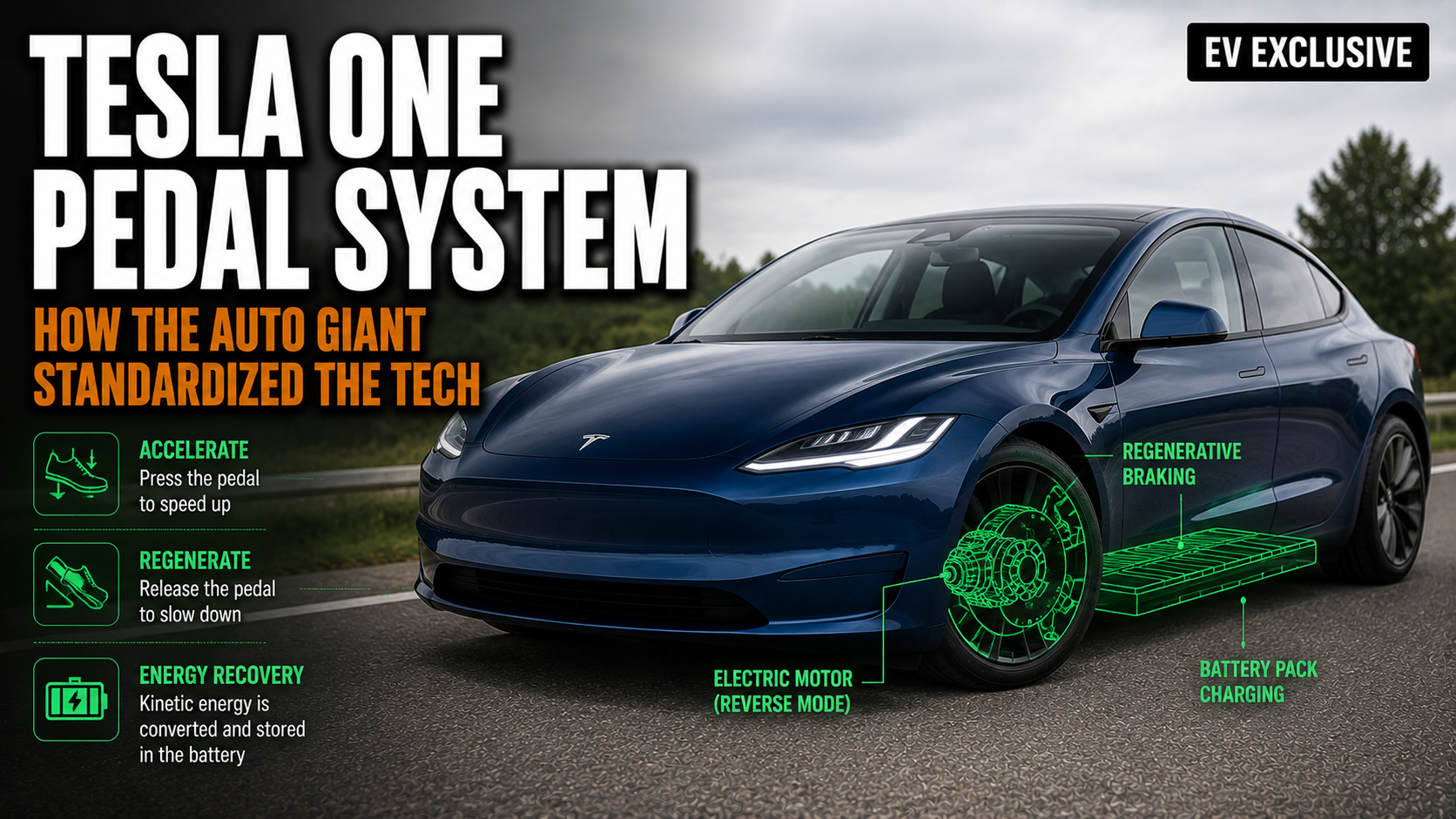
Deceleration requires converting kinetic energy into another form of energy. For a traditional internal combustion engine (ICE) vehicle, friction brakes convert kinetic energy into heat. For an electric vehicle, the electric motor reverses direction to act as a generator, converting kinetic energy into electricity that flows back into the battery pack.
The math of vehicle weight shows why regenerative braking is necessary. A Rivian R1T has a curb weight of 7,148 lbs. A Cadillac Lyriq AWD weighs 5,789 lbs. A comparable mid-size gasoline SUV, like the BMW X5 sDrive40i, weighs 4,828 lbs.
To stop a vehicle traveling at 60 mph, the braking system must handle the kinetic energy:
- Rivian R1T (7,148 lbs / 3,242 kg): 1.16 Megajoules of kinetic energy.
- Cadillac Lyriq AWD (5,789 lbs / 2,626 kg): 0.94 Megajoules of kinetic energy.
- BMW X5 (4,828 lbs / 2,190 kg): 0.78 Megajoules of kinetic energy.
The Rivian R1T carries 48% more kinetic energy than the BMW X5 at the same speed. If a driver relies solely on traditional friction brakes, this energy converts to heat, causing high brake pad wear and potential brake fade under heavy loads. Regenerative braking captures up to 90% of this energy during normal deceleration, protecting the physical pads and rotors from excessive thermal stress.
This lack of physical brake use introduces a different maintenance issue. Because the friction brakes are rarely engaged, moisture accumulates on the steel rotors, leading to surface rust and pitting. Over time, this rust degrades the stopping surface. Drivers can clear this build-up by periodically applying the physical brakes firmly in safe conditions, which scrubs the rotors.
Rivian One Pedal Driving: Settings, Assist, and Pedals that Move
Rivian one pedal driving provides two primary regenerative braking levels: Standard and High. Drivers select these levels through the central infotainment system by navigating to Settings > Vehicle > Drive Modes. The High setting provides aggressive deceleration, allowing the vehicle to stop completely on steep inclines without the driver pressing the physical brake pedal.
Historically, electric vehicles lost regenerative braking capacity under specific conditions. When the battery was cold (typically below 40 degrees Fahrenheit) or fully charged to 100% state of charge (SoC), the battery could not accept high electrical currents. In these scenarios, lifting off the accelerator did not slow the vehicle down as expected. Drivers experienced a sudden loss of braking force, requiring them to quickly stomp on the physical brake pedal to prevent collisions.
Rivian addressed this behavior in software update 2023.50 by introducing the Regenerative Brake Assist feature [Source: Rivian Software Update 2023.50 Release Notes]. Located under Settings > Driver+ > Regen Brake Assist, this option uses the vehicle’s hydraulic friction brakes to supplement regenerative braking when the battery is cold or full.
[Settings] -> [Driver+] -> [Regen Brake Assist] -> [Enable / Disable]
When Regenerative Brake Assist is active, the vehicle monitors deceleration. If the battery limits regenerative current, the system engages the hydraulic brakes to maintain a consistent deceleration rate. Drivers experience a consistent stop feel regardless of battery temperature or charge level. A unique characteristic of this system is that the physical brake pedal moves downward on its own when the computer applies the hydraulic brakes, reflecting the real-time pressure in the system.
Cadillac Lyriq One Pedal Driving: Toggles and the Steering Wheel Paddle
Cadillac lyriq one pedal driving uses a different control structure. Drivers can turn One-Pedal Driving on or off through the 33-inch diagonal advanced LED display. The setting is located under Vehicle Controls > Drive & Park > One-Pedal Driving. The system offers three distinct settings: Off, Normal, and High.
The Lyriq also has a pressure-sensitive steering wheel paddle on the left side of the steering wheel. This control, named Regen on Demand, allows the driver to manually control deceleration without using the foot pedal. The paddle acts as an analog controller. Pulling the paddle gently applies light regenerative braking, while pulling it firmly to the steering wheel applies maximum regenerative force.
[Vehicle Controls] -> [Drive & Park] -> [One-Pedal Driving] -> [Off / Normal / High]
The steering wheel paddle works in combination with the standard One-Pedal Driving settings. If a driver has One-Pedal Driving set to Normal, they can pull the paddle to temporarily increase deceleration when approaching a tight curve or red light. This layout gives the driver precise control over energy recovery without changing their menu preferences. The electronic brake control system blends this regenerative force with hydraulic pressure if the driver eventually presses the physical brake pedal.
Gotchas, Glitches, and NHTSA Investigations
Heavy EV braking systems face unique software and hardware issues. Drivers must remain aware of how these systems fail.
A common issue reported by Cadillac Lyriq owners is sudden disengagement of the One-Pedal Driving system while driving. When this occurs, the vehicle displays messages such as “One-Pedal Driving Unavailable” or “Brake Assist Off” on the instrument cluster. Because the vehicle suddenly stops regenerative braking, it feels like it is accelerating or surging forward. The driver must immediately apply the physical brake pedal to stop the vehicle. This glitch is often linked to wheel speed sensor communication errors or software conflicts in the electronic brake control module.
In addition to software glitches, the Cadillac Lyriq’s physical braking system has been subject to safety investigations. In 2024, the National Highway Traffic Safety Administration (NHTSA) opened an preliminary evaluation into reports of brake assist loss in 2023 and 2024 Cadillac Lyriq models [Source: NHTSA Investigation PE24-005]. The investigation followed reports that the electronic brake control module (specifically the eBoost module) could experience internal component fractures during Anti-Lock Braking System (ABS) events. A fractured component leads to a sudden loss of brake assist, resulting in a hard brake pedal and increased stopping distances.
Cars with One Pedal Driving: A Comparative Directory
Many modern electric vehicles provide one-pedal driving functionality, though their control systems and blending mechanics vary.
Tesla Model 3 / Model Y / Model S / Model X
Tesla vehicles use a single-pedal system that is active by default. Older models allowed drivers to choose between Low and Standard regeneration, but newer versions lock the vehicle into standard one-pedal operation with a “Hold” mode. This hold mode uses the electric motors to bring the car to a stop and applies the physical brakes automatically to hold it in place. Tesla does not use complex hydraulic brake blending; pressing the physical brake pedal always engages the physical brakes directly.
Hyundai Ioniq 5 / Ioniq 6 and Kia EV6 / EV9
Hyundai and Kia vehicles use the “i-Pedal” system. Drivers adjust the regenerative braking intensity using steering wheel paddles, ranging from Level 0 (freewheeling coasting) to Level 3, and then to i-Pedal (full one-pedal driving). The i-Pedal mode must be re-activated every time the vehicle is shifted into Drive. The system blends hydraulic brakes smoothly when the battery cannot accept full regeneration.
Ford Mustang Mach-E / F-150 Lightning
Ford has a toggle for 1-Pedal Drive in the vehicle settings screen. When active, it brings the vehicle to a complete stop and holds it. Ford’s system uses brake blending extensively, meaning that even when you press the brake pedal, the car uses regenerative braking first, only applying the physical pads if you press harder.
Volvo XC40 Recharge / Polestar 2
Volvo and Polestar vehicles provide a simple One-Pedal Drive toggle in the infotainment menu with Off, Low, and Standard options. The Standard setting is aggressive and brings the vehicle to a full stop. These vehicles use a blended braking system, meaning the physical brake pedal triggers regenerative braking before engaging the hydraulic calipers.
Chevrolet Bolt EV / EUV
The Bolt EV has a “Regen on Demand” paddle on the steering wheel, similar to the Cadillac Lyriq, along with a dedicated “L” mode on the shifter for one-pedal driving. The paddle on the Bolt is a simple on/off switch. The Lyriq uses a pressure-sensitive analog paddle.
BMW i4 / iX / i5
BMW uses an automatic recuperation mode that uses radar and navigation data to adjust regenerative braking intensity in real time. If the car ahead slows down, the BMW increases regeneration. Drivers can also select a permanent “B” mode on the gear selector for traditional, high-deceleration one-pedal driving.
Lucid Air
The Lucid Air offers standard and high regenerative braking settings. The high setting allows for complete one-pedal driving. Lucid’s engineering prioritizes direct motor deceleration, keeping the physical brake pedal completely separated from the regenerative system to maintain a consistent mechanical brake feel.
When One-Pedal Driving is a Bad Fit
One-pedal driving is not suitable for all road conditions. Drivers should disable or reduce regenerative braking in specific scenarios to avoid losing vehicle control.
Slippery road surfaces represent the main risk. When driving on snow, ice, or wet leaves, lifting off the accelerator triggers sudden deceleration at the drive wheels. In a rear-wheel-drive or front-wheel-drive vehicle, this sudden drag can break tire traction, causing the vehicle to slide. While modern stability control systems attempt to manage this slip, the transition is less predictable than manual braking. On ice, drivers should switch regenerative braking to its lowest setting and rely on the physical brake pedal, which triggers the anti-lock braking system (ABS) across all four wheels more effectively.
Towing heavy loads also demands caution. A Rivian R1T has a towing capacity of 11,000 lbs. When pulling a heavy trailer, relying solely on one-pedal driving to slow down can overheat the trailer’s brakes if they are electric-hydraulic, or push the vehicle’s regenerative capacity past its limits. Drivers must use the physical brake pedal to engage the trailer brake controller and ensure balanced stopping force between the truck and the trailer.