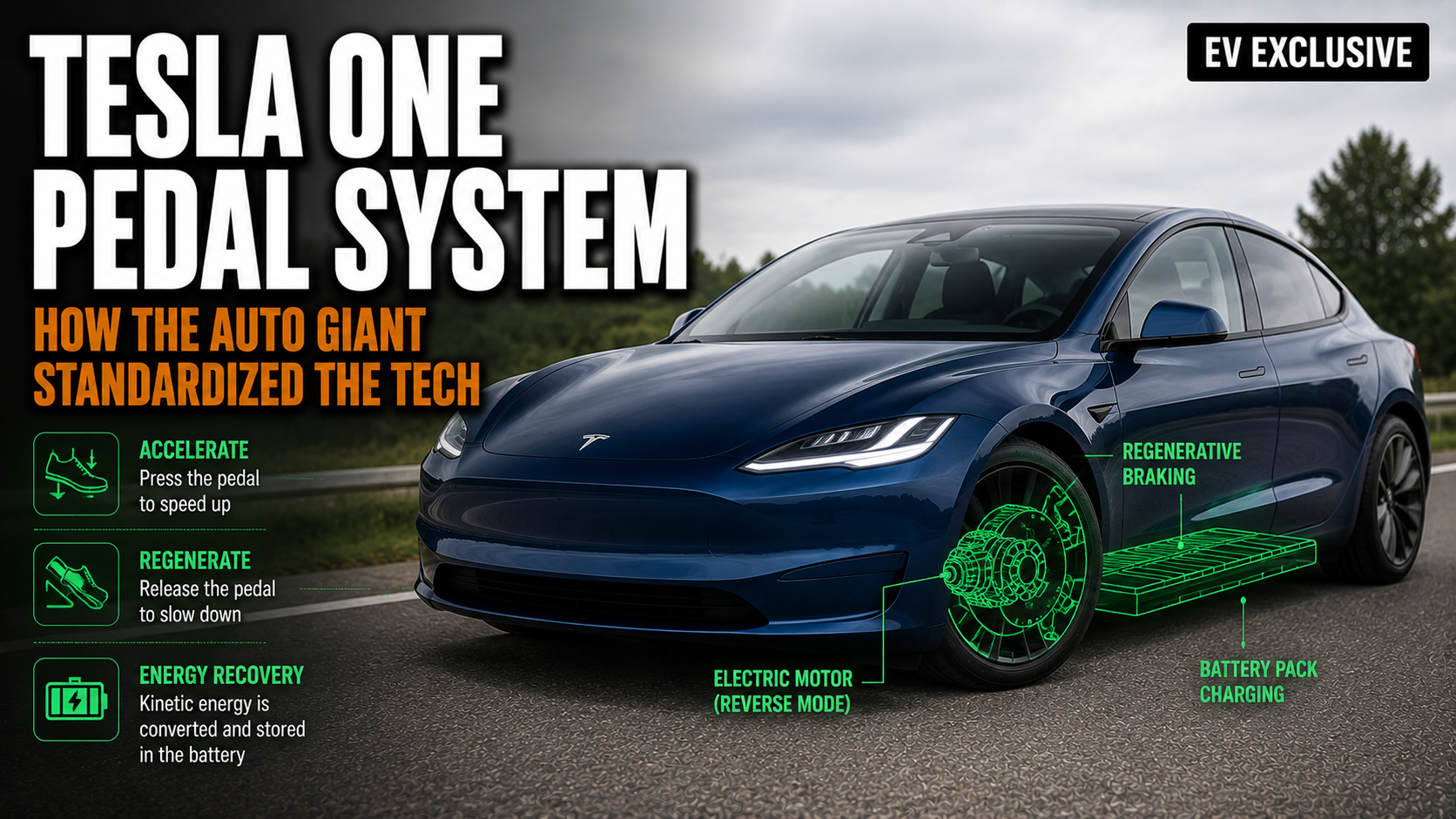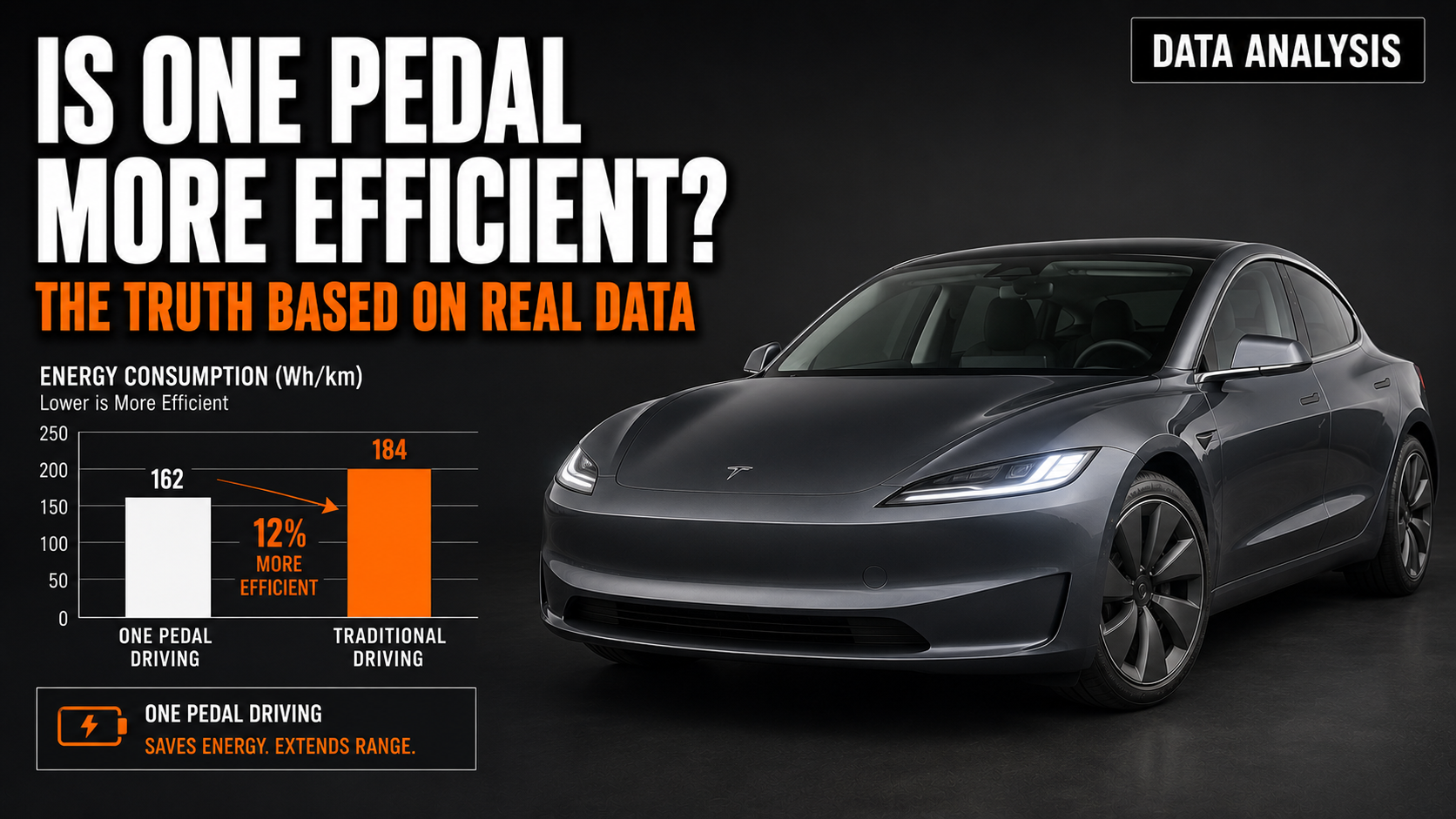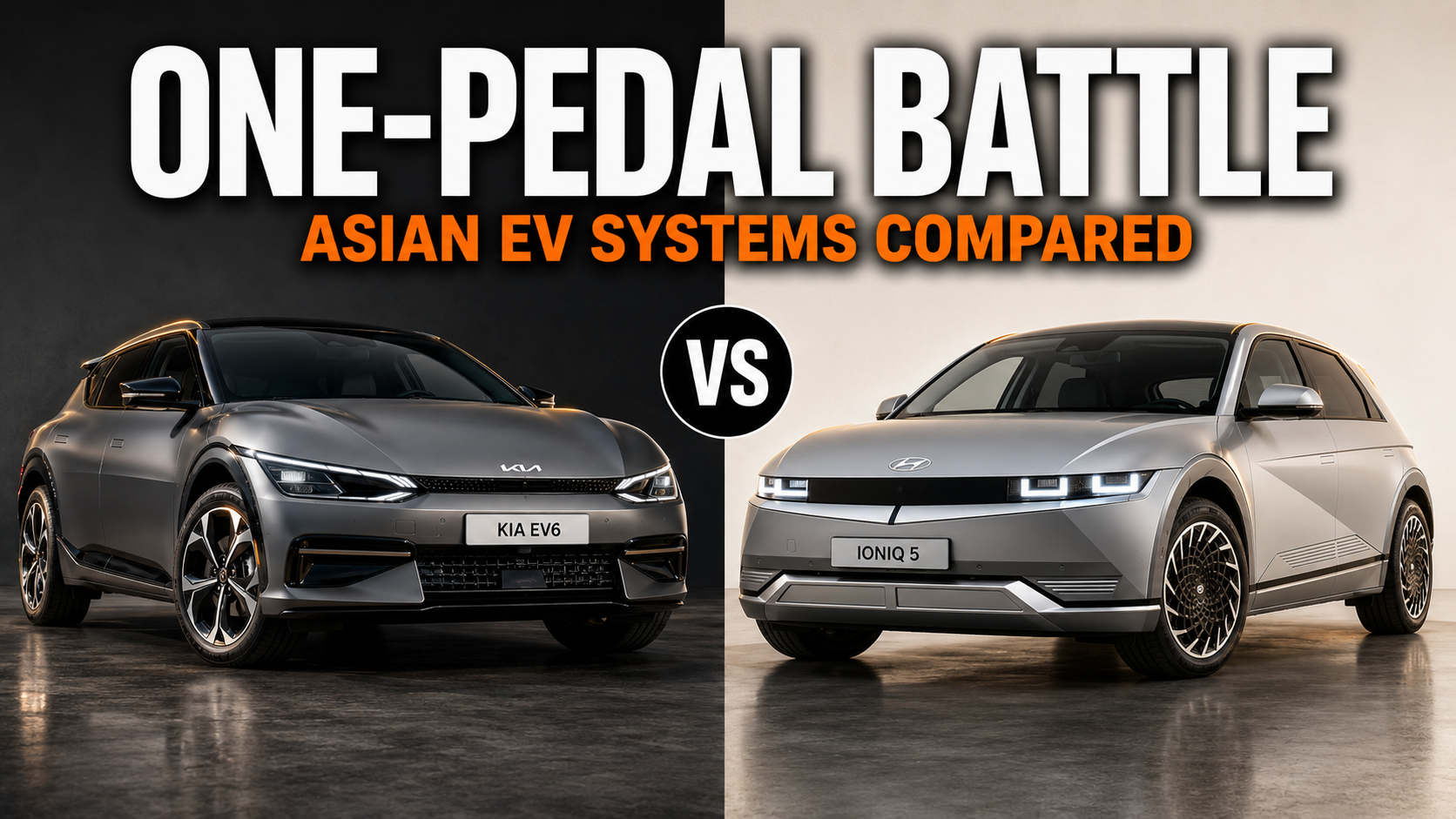

Modern electric SUVs use regenerative braking to slow the vehicle, but manufacturers implement these systems differently. The Kia EV6 uses the i-Pedal system, which is paddle-adjustable but resets to Level 3 on every start. The Nissan Ariya uses the e-Step system, which slows the SUV to a 2 mph crawl but does not hold the vehicle at a complete stop without pressing the brake pedal. The Honda Prologue uses GM’s Ultium platform architecture, allowing drivers to select Off, Normal, or High modes through the touchscreen menu, and features a manual steering wheel paddle. Each system has unique settings, limits, and driving habits that affect energy recovery and brake wear.
To help you compare these systems quickly, the table below summarizes the key features of the Kia EV6, Nissan Ariya, and Honda Prologue.
| Feature | Kia EV6 | Nissan Ariya | Honda Prologue |
|---|---|---|---|
| System Name | i-Pedal | e-Step | One-Pedal Driving |
| Primary Controls | Steering wheel paddles | Physical console switch | Touchscreen controls |
| Complete Stop? | Yes (Hold Mode) | No (Slows to 2 mph crawl) | Yes (Hold Mode) |
| Setting Persists? | No (Resets to Level 3) | Yes (If configured in settings) | Yes (Retains last setting) |
| Manual Regen Paddle | Yes (Left/Right paddles) | No | Yes (Left paddle only) |
| Brake Blending | Yes | Yes (Coordinated braking) | Yes (Ultium architecture) |
For additional context on how heavy electric SUVs manage braking physics and mechanical blending, you can read our guide on [heavy-ev-braking-systems.md](file:///d:/Dev/Project/Content/Autoguidez.com/heavy-ev-braking-systems.md).
Kia EV6 one pedal driving
The Kia EV6 one pedal driving system, known as i-Pedal, allows the driver to speed up, decelerate, and come to a complete stop using only the accelerator pedal. Drivers activate this mode by pulling the left steering wheel paddle multiple times until the instrument cluster shows the green i-Pedal icon. This setting does not persist across drive cycles, requiring manual activation every time the vehicle is restarted.
The EV6 utilizes steering wheel paddles to control the intensity of its regenerative braking across five distinct settings. Levels 0 through 3 offer varying degrees of deceleration when the driver lifts off the accelerator. Level 0 allows the vehicle to coast freely, mimicking a traditional internal combustion vehicle, while Level 3 provides heavy deceleration. Pulling the left paddle one final time when at Level 3 activates the i-Pedal system.
When active, the i-Pedal mode allows for full deceleration up to 0.25g. The vehicle’s electronic control unit coordinates the front and rear electric motors to capture kinetic energy and recharge the battery pack. Once the EV6 slows to a complete stop, the hydraulic brakes apply automatically to hold the vehicle in place on flat roads or inclines.
The main drawback of the Kia system is the lack of memory retention. When you shift the vehicle out of Drive or shut down the motor, the i-Pedal setting resets. On the next drive cycle, the vehicle defaults to Level 3. You must manually pull the left paddle once more to re-enable i-Pedal. Kia designed this reset behavior to ensure that drivers do not experience unexpected heavy braking in low-traction conditions or when the battery is too cold to accept high charge currents.
Nissan Ariya one pedal driving
The Nissan Ariya one pedal driving system uses an e-Step mode that increases regenerative braking force but does not bring the vehicle to a complete standstill. Instead of stopping, the system decelerates the SUV to a crawl of approximately 2 mph, simulating the creep behavior of a conventional automatic transmission. Drivers must apply the physical brake pedal to bring the vehicle to a full stop and hold it there.
Nissan introduced the e-Step system as a successor to the e-Pedal system found in the Nissan Leaf. While the Leaf’s system could stop the vehicle entirely, Nissan engineers modified the Ariya’s behavior based on customer feedback. Many drivers found the final transition from regenerative deceleration to a complete hydraulic hold to be rough and unpredictable. Consequently, the Ariya’s e-Step system focuses strictly on deceleration down to 2 mph, leaving the final stop to the driver’s foot.
To turn on e-Step, the driver presses a physical button on the center console. The system provides a maximum deceleration rate of roughly 0.22g. When you lift off the accelerator, the electric motors resist rotation to slow the vehicle, but the system also uses coordinated braking. This setup blends motor regeneration with physical friction braking automatically when you press the brake pedal.
Unlike Kia’s system, the Ariya can remember your e-Step preferences. By navigating to the Driver Assistance settings on the vehicle information screen and turning on the Retain Mode option, the e-Step system will remain active on subsequent drive cycles. This is convenient for drivers who want a consistent deceleration feel without having to toggle a button every time they start the SUV.
Honda Prologue one pedal driving
The Honda Prologue one pedal driving configuration provides three settings: Off, Normal, and High. These modes are selected through the central touchscreen display, and they inherit their electrical behaviors from GM’s Ultium platform. The Prologue also includes a steering wheel deceleration paddle to provide temporary maximum braking force on demand.
The Honda Prologue represents a joint venture with General Motors, resulting in the use of GM’s electrical architecture and drive components. To configure the one-pedal driving behavior, you must use the infotainment screen by navigating to Controls > Drive & Park > One-Pedal Driving. Selecting Off allows the SUV to coast naturally. Selecting Normal enables moderate regenerative braking, while High provides aggressive deceleration up to 0.3g, allowing you to stop the vehicle completely and hold it without using the brake pedal.
The Prologue retains your selected mode across restarts, so you do not need to adjust the screen on every trip. In addition to the touchscreen settings, the Prologue features a mechanical deceleration paddle on the left side of the steering wheel. Pulling and holding this pressure-sensitive paddle activates maximum regenerative braking immediately. This allows you to slow down quickly when approaching curves or traffic lights, even if your screen setting is set to Off or Normal.
The Ultium platform’s brake blending is highly sophisticated. The electronic brake control module coordinates the electric motors and the hydraulic calipers. When you press the brake pedal, the system determines the maximum energy that the battery can safely absorb and uses the friction brakes only to cover the remaining deceleration requirement. This minimizes brake wear and maximizes driving range.
Technical comparison of braking specifications
Comparing the mechanical specifications of these three electric SUVs reveals how weight, battery capacity, and charging speed influence their stopping dynamics. The heavier weight of the Honda Prologue requires a highly capable blended braking system to handle its kinetic energy. The Kia EV6 benefits from an 800-volt system that allows for rapid energy capture during deceleration.
Electric vehicles are heavier than gasoline vehicles because of their battery packs. The curb weight of the Kia EV6 ranges from 4,132 lbs for the base rear-wheel-drive trim up to 4,883 lbs for the high-performance GT trim. The Nissan Ariya weighs between 4,300 lbs and 4,800 lbs depending on the battery size and whether it has the e-4ORCE all-wheel-drive system. The Honda Prologue is the heaviest of the three, with a curb weight of 4,932 lbs for front-wheel-drive models and up to 5,273 lbs for all-wheel-drive trims.
To stop a vehicle traveling at 60 mph, the braking system must convert massive amounts of kinetic energy. The Prologue AWD (5,273 lbs / 2,392 kg) carries 0.86 Megajoules of kinetic energy, which is about 18% more than a base Kia EV6 (4,132 lbs / 1,874 kg) carrying 0.67 Megajoules. The Prologue’s Ultium platform manages this weight by using a large 85 kWh battery pack that can accept up to 155 kW of DC fast charging power. The Kia EV6 uses a 63 kWh or 84 kWh battery and can accept up to 350 kW of DC fast charging, allowing its motors to generate higher regenerative currents during braking. The Nissan Ariya utilizes a 63 kWh or 87 kWh usable battery and supports a maximum DC charging rate of 130 kW, limiting its maximum regenerative capture rate slightly compared to the EV6.
The table below lists the engineering specifications, pricing, and system properties for these three vehicles.
| Specification / Feature | Kia EV6 (AWD) | Nissan Ariya (e-4ORCE) | Honda Prologue (AWD) |
|---|---|---|---|
| Curb Weight | 4,630 – 4,883 lbs | 4,700 – 4,800 lbs | 5,086 – 5,273 lbs |
| Usable Battery Size | 84.0 kWh (Long Range) | 87.0 kWh (Extended Range) | 85.0 kWh |
| Max DC Fast Charging Rate | 350 kW | 130 kW | 155 kW |
| Maximum Deceleration Rate | Up to 0.25g | Up to 0.22g | Up to 0.30g |
| One-Pedal System Name | i-Pedal | e-Step Mode | One-Pedal Driving |
| Steering Wheel Control | Adjustable Paddles (Levels 0-3) | None (Console Button Only) | Deceleration Paddle |
| Full Stop Capability | Yes | No (Requires brake pedal) | Yes |
| Estimated MSRP Range (USD) | $43,000 – $65,000 | $43,000 – $60,000 | $47,400 – $59,000 |
When one-pedal driving is a poor choice
One-pedal driving is a poor choice when navigating icy roads or towing heavy trailers. Under low-traction conditions, sudden regenerative braking can cause the tires to slip and slide before the stability control system can intervene. When towing, one-pedal systems do not automatically engage trailer brakes, placing the entire stopping force on the vehicle’s electric motor and increasing stopping distances.
Operating an electric SUV in winter conditions requires a different braking approach. When one-pedal driving is active, lifting off the accelerator pedal immediately applies deceleration force to the drive wheels. On snow, ice, or wet leaves, this sudden drag can break tire traction, leading to a skid. While the traction control system attempts to manage wheel spin, the reaction is less controlled than using the physical brake pedal. The physical brake pedal engages the anti-lock braking system (ABS) across all four wheels, distributing hydraulic pressure automatically to maintain control. Drivers should select the lowest regenerative setting or turn off one-pedal driving entirely in freezing temperatures.
Towing also presents a challenge for regenerative braking. The Kia EV6 AWD has a towing capacity of 2,300 lbs, the Nissan Ariya AWD can tow up to 1,500 lbs, and the Honda Prologue AWD is rated for 1,500 lbs. When pulling a trailer, the vehicle’s deceleration does not trigger the electric or hydraulic brakes on the trailer unless the physical brake pedal is pressed. Relying solely on one-pedal driving to slow down means the trailer’s mass pushes against the tow vehicle. This can overheat the electric motors, overload the battery’s charge limit, or cause trailer sway. Drivers should use the physical brake pedal to engage the trailer brake controller and ensure balanced stopping force.