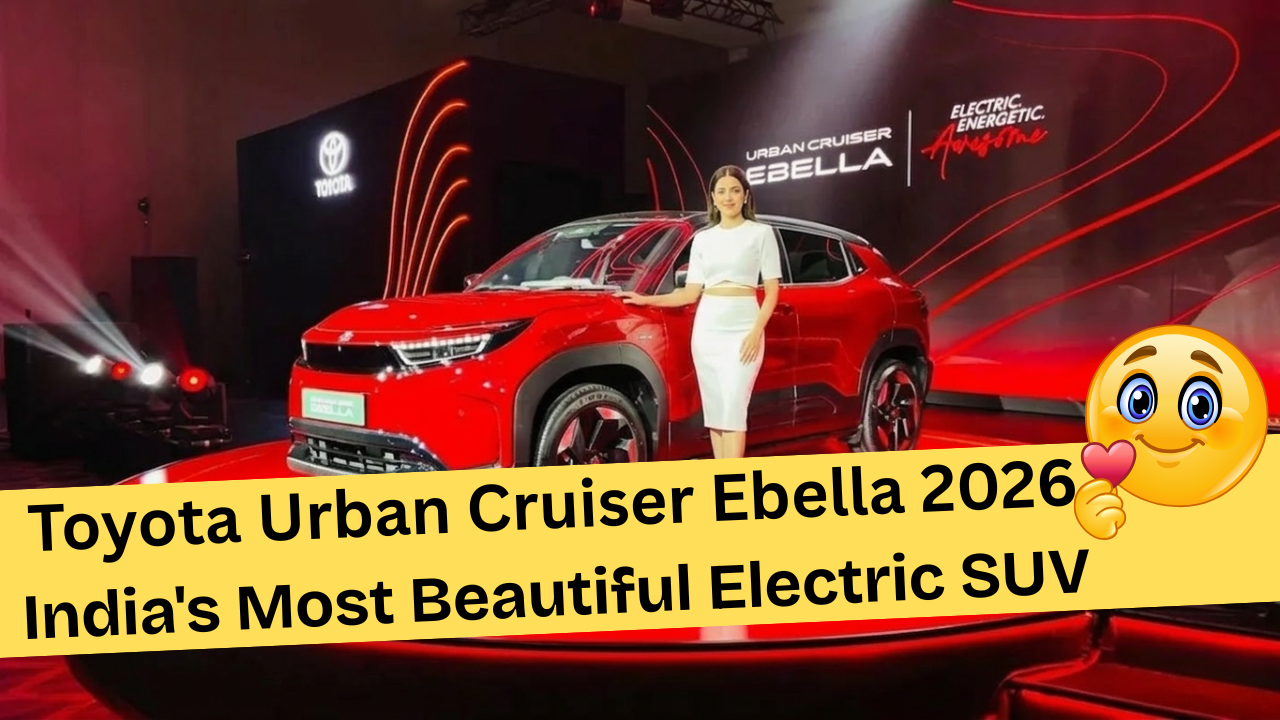
Imagine pulling up to a Saturday evening dinner in Bengaluru’s Indiranagar, stepping out of an SUV that turns more heads than anything with a German badge parked next to it — and it cost you under ₹25 lakhs. That is the quiet confidence the Toyota Urban Cruiser Ebella brings to the Indian EV conversation in 2026. In a segment increasingly crowded with competent but visually forgettable crossovers, Toyota has done something genuinely unexpected: it has built the best-looking electric SUV in its class. But stunning design alone does not win in a market as demanding as India’s, where buyers want reliability, real-world range, and value that holds up three years down the line. So the real question is — does the Ebella have the substance to match its style? Let’s get into it.
Why the Ebella Matters in 2026
Toyota entering the Indian EV market is not a small event. For decades, the brand has operated with a philosophy that prioritises durability and resale value above all else — a philosophy that resonates deeply with the Indian middle class. The Urban Cruiser Ebella (“Ebella” translating to “Electric Beauty,” which for once feels earned rather than aspirational) represents Toyota’s first serious EV play in the mass-market Indian segment.
It shares a platform and battery architecture with the Maruti Suzuki eVX, but Toyota has done meaningful differentiation work: its own “Hammerhead” front design language, a JBL audio system over the eVX’s Infinity setup, and a suite of connected car features through Toyota’s app ecosystem. Priced in the ₹20–24 lakh range, it targets buyers who were waiting for a Toyota-badged EV with Toyota’s legendary after-sales peace of mind. In a market where EV service anxiety is almost as real as range anxiety, that badge carries considerable weight.
First Impressions & Exterior Design
In person, the Ebella’s design language is its most immediately compelling argument. The “Hammerhead” front fascia — a wide, sharp LED DRL strip anchoring an aggressive bumper — gives it a road presence that punches well above its price point. The self-leveling projector headlights are a thoughtful touch, the kind of feature that quietly says “we thought about the details” without announcing itself. The 18-inch alloy wheels fill the arches confidently, and the side profile has clean, flowing lines rather than the overly-sculpted creases that date many EVs quickly.
At the rear, the lighting signature is distinctive enough to be recognizable in your rearview mirror at night — which matters in Indian traffic where distinctive rear lights are both a safety feature and a design statement. The overall proportions feel purposeful and road-ready, a significant departure from the more convention-bound Urban Cruiser HEV it sits alongside in Toyota showrooms.
If there is an exterior criticism, it is this: the Ebella looks somewhat conventional from the side, lacking the dramatic silhouette cues that mark the Tata Harrier EV or Mahindra BE 6 as belonging to a new generation. It is a very attractive conventional SUV, rather than a car that looks unmistakably electric.
Interior & Cabin Experience
Step inside and the Ebella delivers a mixed impression. The dashboard layout is clean and logically organised, with good use of horizontal lines to make the cabin feel wider. The driving position is excellent — high and commanding, as Indian highway drivers prefer — and the overall fit and finish impression is solid from the front seats.
The honest limitation, however, is that some plastics and fabric choices feel a touch below what buyers at this price point have come to expect in 2026. The glossy center console panel, while premium-looking at first glance, attracts fingerprints and micro-scratches with the kind of enthusiasm that will frustrate meticulous owners within the first month of Indian daily use.
The rear bench is where the Ebella’s “Born EV” credentials run into a practical compromise. Despite being purpose-built as an electric vehicle, the elevated floor results in a high seating position that leaves rear passengers — particularly taller adults — with noticeably poor under-thigh support. On a Delhi to Agra run, this matters. It is not disqualifying, but it is a genuine ergonomic gap that Toyota will need to address in any future update.
Infotainment & Tech Features
The infotainment system is a highlight. The touchscreen is responsive and well-integrated, and the connected car features via Toyota’s app allow remote monitoring and pre-conditioning — useful for cooling a car parked under the brutal Rajasthan or Tamil Nadu afternoon sun before you get in. The interface is intuitive enough that even first-time EV owners will not feel overwhelmed.
The JBL audio system is noticeably superior to the Infinity setup in the Maruti sibling — cleaner highs, better staging, and a subwoofer response that makes long highway drives genuinely enjoyable. This is one of the more meaningful differentiations Toyota has made between the two badge-siblings.
The notable gap in this cabin’s tech story is the regenerative braking control. Unlike the Hyundai Creta Electric, which puts paddle shifters on the steering column for intuitive one-pedal driving adjustment, the Ebella requires navigating through the touchscreen menus to change regeneration intensity. In stop-start Bengaluru or Mumbai traffic — exactly where regen control matters most — this is an inconvenient oversight that disrupts the driving flow.
Performance & Driving Experience
The Ebella is not designed to excite — it is designed to reassure, and it does that beautifully. Power delivery in all three drive modes (Eco, Normal, Sport) is smooth and linear rather than abrupt. In Sport mode, the throttle response sharpens meaningfully, but the character remains composed rather than aggressive. Think of it less like a sports car and more like a modern express train: fast when asked, but always in control.
Steering is light and direct — appropriate for city maneuvering but offering modest feedback on winding hill roads. For the Coorg or Mahabaleshwar weekend driver, this means confident parking and urban agility, but a slightly detached feel when the road gets interesting.
The ride quality is where the Ebella genuinely earns applause. Toyota and Suzuki have calibrated the suspension specifically for Indian road realities — potholes, speed breakers, and the occasional crater-sized pothole that appears without warning on state highways. The result is a plush, absorbent ride that makes you forget about road quality, which is probably the single most important comfort metric for Indian buyers.
The braking system deserves a specific mention: the transition between regenerative and hydraulic braking is seamless. Early EVs had a jerky, spongy pedal feel at this transition point. The Ebella has solved this — the pedal behaves like a well-sorted conventional car, which will ease the transition for first-time EV buyers upgrading from a Maruti Swift or Hyundai i20.
Real-World Range & Charging
With a 61 kWh battery pack, the Ebella’s claimed range sits at approximately 490–500 km under standard conditions. In real-world Indian usage — consistent air conditioning, mixed city and highway driving — a realistic figure of 390–420 km is more honest and still entirely adequate for most urban and intercity use cases.
The Jaipur-to-Delhi run, a popular benchmark for Indian EV highway capability, is comfortably achievable. For city commuters in Hyderabad, Pune, or Chennai covering 50–80 km daily, the Ebella can go several days between charges — a significant psychological shift from the range anxiety that has historically kept mainstream buyers away from EVs.
One honest flag: early efficiency data suggests the Ebella is not the most energy-efficient vehicle in its class. Compared to the Hyundai Creta Electric, which ekes out more km per kWh in city conditions, the Ebella’s real-world range may trail slightly in heavy urban stop-start usage. This is an area where a software OTA update could potentially help once Toyota collects sufficient real-world fleet data.
DC fast charging support means public charging stops of 30–45 minutes can add 200+ km of range, making it viable for longer road trips on NH corridors with Tata Power or BPCL charger access.
Safety Features
Toyota’s global safety commitment carries through to the Ebella. Standard features include:
- 6 airbags across all variants
- Electronic Stability Control (ESC) and Hill Start Assist
- ADAS suite with autonomous emergency braking, lane departure warning, and adaptive cruise control
- 360-degree camera system for urban parking
- Rear cross-traffic alert
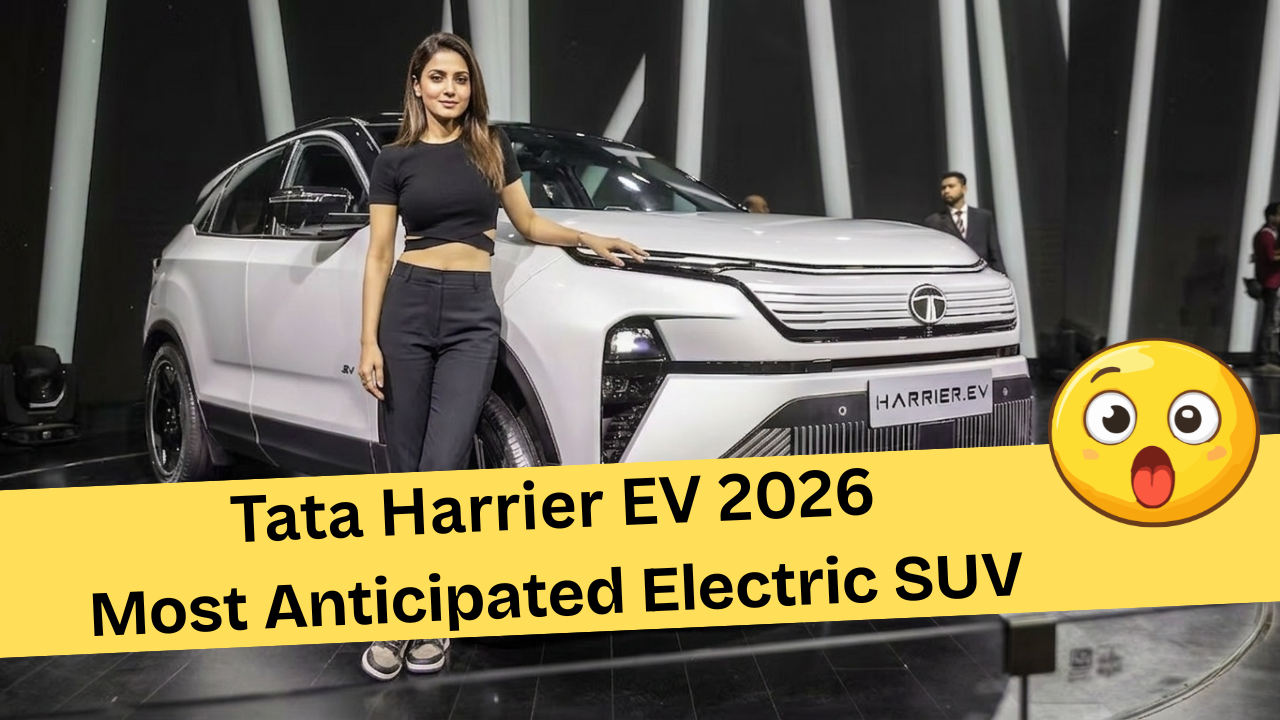
For a car positioned in the ₹20–24 lakh range, this safety package is comprehensive and genuinely competitive. Tata’s ADAS implementation still leads the segment in feature depth, but the Ebella’s suite covers the essentials that matter for Indian driving conditions.
Full Specifications
| Specification | Details |
|---|---|
| Battery Capacity | 61 kWh |
| Claimed Range | ~490 km (ARAI) |
| Real-World Range | ~390–420 km |
| Motor Type | Permanent Magnet Synchronous |
| Peak Power | ~175 PS |
| Peak Torque | ~300 Nm |
| Drive Type | FWD |
| Wheel Size | 18-inch alloys |
| Infotainment | Touchscreen with connected car tech |
| Audio System | JBL multi-speaker |
| ADAS | Level 2 |
| Airbags | 6 standard |
| Fast Charging | DC fast charging supported |
Price & Variants
The Ebella’s pricing positions it as a premium-but-accessible EV option:
- Base Variant — Approx. ₹20.00 Lakhs (est.)
- Mid Variant — Approx. ₹21.5–22.5 Lakhs (est.)
- Top Variant — Approx. ₹23–24 Lakhs (est.)
If the top-end crosses ₹23 lakhs, it finds itself in direct value competition with the Tata Harrier EV’s lower variants — a more feature-rich package. Toyota’s advantage at that crossover point is purely badge trust and service network depth, which for a significant portion of Indian buyers is a decisive factor.

Competitor Comparison
| Model | Battery | Real Range | Power | Starting Price |
|---|---|---|---|---|
| Toyota Urban Cruiser Ebella | 61 kWh | ~400 km | ~175 PS | ~₹20.00 L |
| Hyundai Creta Electric | 51.4 kWh | ~400 km | 171 PS | ₹17.99 L |
| Tata Harrier EV (EV65) | 65 kWh | ~420 km | ~175 PS | ₹21.49 L |
| Maruti Suzuki eVX | 61 kWh | ~480 km | ~175 PS | ~₹19.50 L |
The Hyundai Creta Electric’s paddle-shifter regen, superior cabin efficiency, and lower price make it a tougher comparison than it looks on paper. The Ebella’s strongest answer is Toyota reliability and design appeal — both real and meaningful differentiators for the right buyer.
FAQs
Is the Toyota Urban Cruiser Ebella better than the Maruti Suzuki eVX?
They share the same platform and battery, but the Ebella adds JBL audio, a more aggressive front design, and Toyota’s connected tech features. If you value Toyota’s service network and slightly more premium differentiation, the Ebella justifies a modest price premium over the eVX.
Is 61 kWh enough for highway trips across India?
For most common intercity routes — Jaipur to Delhi, Bengaluru to Mysuru, Mumbai to Goa — the 61 kWh pack is adequate with one planned charging stop. For daily city commuters covering under 80 km per day, it offers several days of worry-free driving between charges.
How does the Ebella handle Indian summer heat on the battery?
Toyota’s thermal management system is built for global markets including hot-climate regions. Pre-conditioning via the app before a drive is a practical tool for Indian summers, allowing you to cool the cabin before entry without running on battery while stationary.
What is Toyota’s warranty on the Ebella’s battery?
Toyota is expected to offer its standard 8-year / 1.6 lakh km battery warranty, in line with industry norms and consistent with their global EV warranty commitments.
Should I wait for a future update or buy now?
If you need an EV today and value Toyota reliability above all else, buy now. If you are primarily chasing maximum features-per-rupee, waiting 6 months to see if Toyota responds to competitor pressure with feature additions or a price adjustment is reasonable.
Final Verdict
The Toyota Urban Cruiser Ebella is the most visually compelling EV Toyota has put on Indian roads — and it backs that design confidence with a ride quality and build reliability that will satisfy buyers for years without drama. The limitations are real and worth naming: the rear seat ergonomics are a compromise, the regen controls are buried too deep in software menus, and some interior materials feel slightly below the bar for a ₹22+ lakh vehicle. If you are someone who puts Toyota’s service network, resale value predictability, and long-term mechanical trust above cutting-edge cabin technology, the Ebella is a very easy recommendation. If you want the last word in feature-loading and are less brand-loyal, the Tata Harrier EV or Hyundai Creta Electric offer compelling alternatives at similar money. But if design and dependability in a single package is your brief — the Ebella delivers that combination better than anything else in this price band. It is not the smartest EV at ₹20 lakhs. It might just be the one you never regret buying.