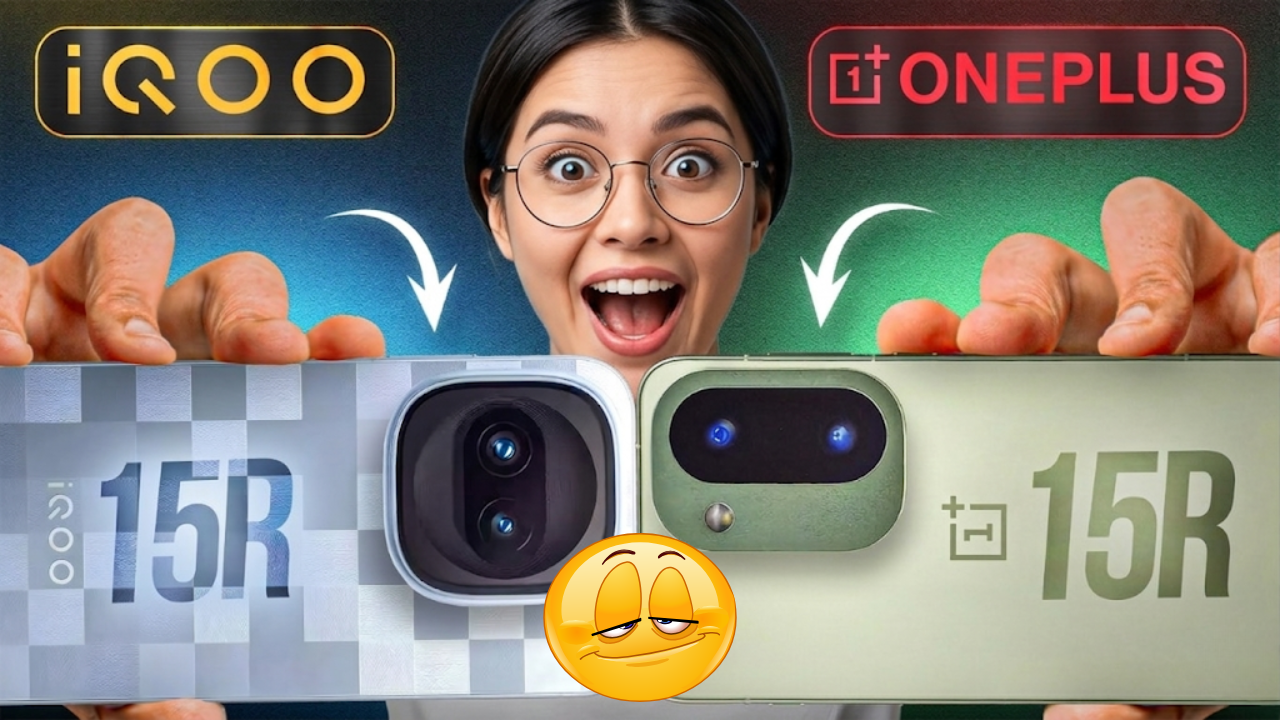
OnePlus 15R vs iQOO 15R: You have ₹40,000–₹45,000 to spend on a smartphone, and you want the absolute best your money can buy — no compromises on performance, no excuses on battery life, and no regrets six months down the line. Right now in India, that conversation starts and ends with exactly two phones: the OnePlus 15R and the iQOO 15R. Both carry the Snapdragon 8 Gen 5 chipset, both sport massive batteries, and both are priced to fight each other directly — which makes choosing between them genuinely difficult. I have spent considerable time with both devices in real-world conditions — daily commutes on Bengaluru roads, extended gaming sessions on summer evenings, and camera tests in everything from bright Goa sunlight to dimly lit wedding functions — and the differences that emerge are more nuanced than any spec sheet will tell you. Here is everything you need to know to make the right call.
The Context: Why This Fight Matters
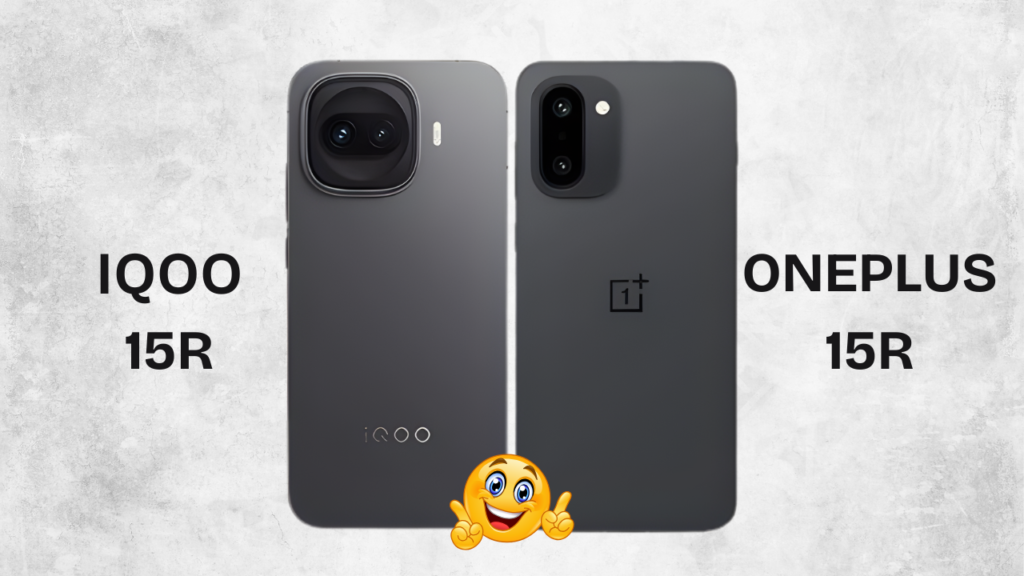
The upper mid-range segment in India — loosely defined as ₹35,000 to ₹50,000 — is where the smartphone market gets genuinely ruthless. Buyers in this bracket are informed, patient, and unforgiving. They read reviews, watch comparisons, and will call out any compromise you try to hide behind marketing language.
Both OnePlus and iQOO know this. Which is precisely why the 15R from each brand feels like it was designed in direct response to the other. OnePlus has anchored itself around the premium user who wants a polished, glass-and-metal flagship experience without the flagship price tag. iQOO has gone the opposite direction — lighter, meaner, built for the gamer and content creator who measures a phone’s worth in screen-on time and frame rate stability.
Neither approach is wrong. But only one of them is right for you — and that distinction is what this comparison is here to settle.
Design & Build: Glass Luxury vs. Practical Precision
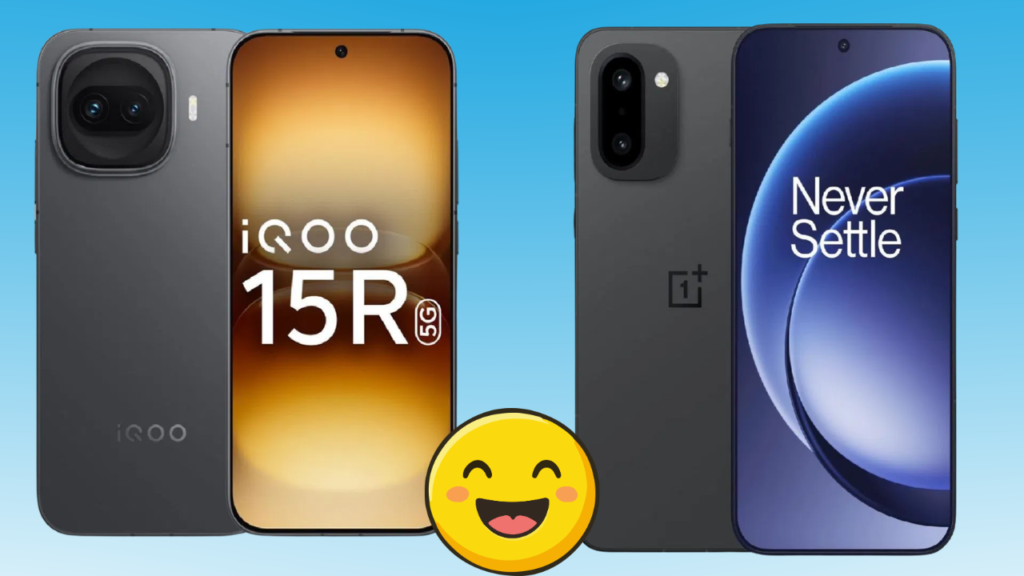
The moment you pick up the OnePlus 15R, it announces itself. The glass back catches light in that satisfying way that only proper glass does, and the metallic frame wraps around it with a precision that feels genuinely expensive. This is a phone you can place on a conference table or pull out at a client meeting and it reads as premium immediately. For professionals in Indian metros who carry their phone as an extension of their personal image, this matters.
The iQOO 15R takes a more pragmatic path. The polycarbonate back is not the compromise it might initially seem — it is a deliberate engineering decision. The material is significantly lighter, more resistant to shattering on the inevitable drop onto a marble floor, and far friendlier to grip during marathon gaming sessions. The matte finish also resists fingerprints better than the OnePlus in real-world use.
On durability, both phones carry impressive water resistance ratings, but there is a meaningful gap:
- OnePlus 15R: IP68 + IP69 + IP69K rated — the additional IP69K certification means it can withstand high-pressure water jets. Useful if you are caught in a heavy Mumbai monsoon downpour or rinsing the phone under a tap.
- iQOO 15R: IP68 + IP69 rated — still robust and more than sufficient for everyday rain, spills, and sweaty summer hands.
Honest note on the OnePlus: glass backs are beautiful, but they are also magnets for fingerprints in India’s heat and humidity, and they will shatter on a hard fall. Carry it with a case or carry the anxiety. The iQOO’s polycarbonate back sidesteps this problem entirely.
Weight & Ergonomics: The Underrated Factor
This is the section most comparison articles skip — and it is the one that often determines which phone you actually enjoy using three months after the purchase excitement fades.
The OnePlus 15R, with its 6.83-inch display and glass build, is noticeably heavier. During long calls, extended scrolling sessions on the Delhi metro, or holding the phone up to photograph a stage performance, that extra gram count begins to register as wrist fatigue. It is not a dealbreaker for most users, but it is real.
The iQOO 15R, thanks to its polycarbonate back and slightly smaller 6.59-inch form factor, feels meaningfully lighter and more balanced in the hand. For mobile gamers in particular — where a 45-minute BGMI session is normal — the iQOO’s ergonomics translate directly into a more comfortable extended-use experience. The lighter phone simply tires your hand less.

Verdict on Design & Ergonomics: OnePlus wins on visual prestige; iQOO wins on day-long comfort.
Display: 165Hz Cinema vs. 144Hz Sunlight Champion
Both phones run flat 1.5K AMOLED panels — the display technology choice that defines the upper mid-range segment in 2026. But the experience they deliver is meaningfully different.
OnePlus 15R Display
The 6.83-inch panel with a 165Hz refresh rate is the headline. For a media-consumption phone, this screen is exceptional. Watching cricket highlights, streaming Jio Cinema at full quality, or scrolling through Instagram Reels — everything flows with a silkiness that lower refresh rate displays simply cannot replicate. The colours are punchy and vibrant, and the sheer size of the panel creates a genuinely cinematic feel for video content. If you watch a lot of content on your phone, this screen will spoil you.
iQOO 15R Display
The 6.59-inch panel at 144Hz gives up the size and refresh rate advantage on paper, but makes up for it where it counts most in Indian daily life: outdoor brightness. Under direct afternoon sunlight — on a terrace in Hyderabad, at an outdoor market in Jaipur, or walking between classes on a college campus — the iQOO’s display remains remarkably clear and readable. The OnePlus, despite its higher refresh rate, loses the outdoor visibility comparison.
For gamers, the iQOO’s 144Hz combined with its dedicated Q2 gaming chip produces smoother, more stable frame delivery than the OnePlus’s 165Hz in extended sessions.
| Display Spec | OnePlus 15R | iQOO 15R |
|---|---|---|
| Size | 6.83 inches | 6.59 inches |
| Resolution | 1.5K AMOLED | 1.5K AMOLED |
| Refresh Rate | 165Hz | 144Hz |
| Panel Type | Flat AMOLED | Flat AMOLED |
| Outdoor Visibility | Good | Excellent |
| Best For | Media Consumption | Gaming + Outdoor Use |
Ports, Buttons & Everyday Usability
Both phones carry USB Type-C ports with fast charging support and physical SIM trays. Neither includes a 3.5mm headphone jack — a trade-off that has become standard at this price tier.
The OnePlus 15R retains its signature Alert Slider — a physical three-position switch on the right side that toggles between Silent, Vibrate, and Ring modes without unlocking the phone. For Indian users who constantly move between noisy commutes and quiet meetings, this is one of those quality-of-life features that you miss desperately once you go back to a phone that does not have it.
The iQOO 15R does not have a physical shortcut slider but compensates with a well-placed side-mounted fingerprint sensor (combined with the power button) that is fast, accurate, and works reliably even with slightly damp fingers — a relevant consideration during India’s monsoon months.
Both phones support NFC for contactless payments, which is increasingly relevant as UPI tap-and-pay infrastructure expands across Indian retail.
Performance: Same Chip, Different Personalities
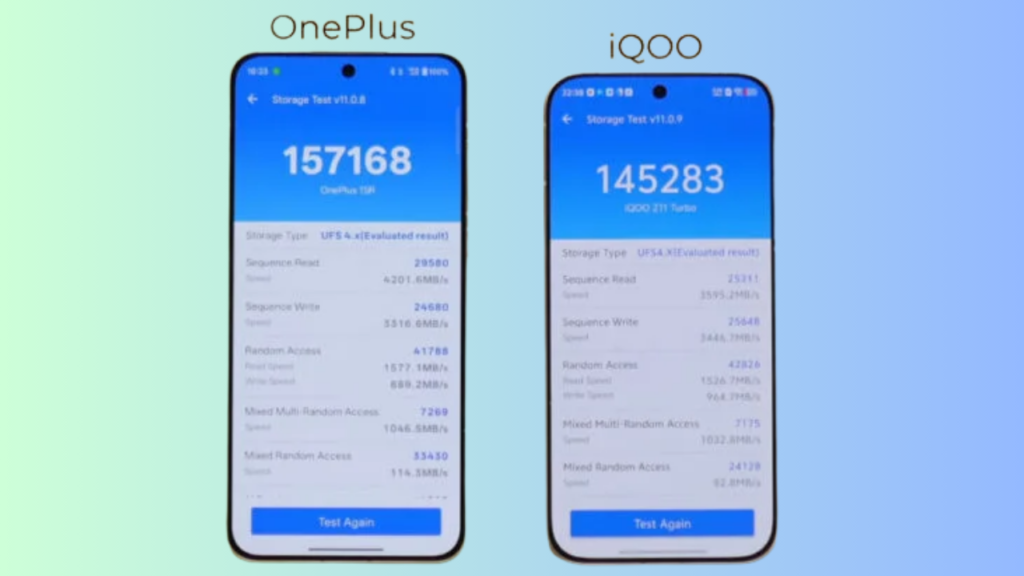
Beneath both devices sits the Snapdragon 8 Gen 5 — the most powerful mobile processor available in 2026. Paired with LPDDR5X Ultra RAM and UFS 4.1 storage, day-to-day performance on both phones is simply beyond criticism. Apps open instantly, multitasking is seamless, and neither phone has broken a sweat during anything we have thrown at them in normal usage.
The personality difference emerges during sustained heavy load:
The OnePlus Approach: OxygenOS 16’s optimization means the OnePlus 15R consistently scores marginally higher in benchmark tests like AnTuTu and Geekbench. The software extracts slightly more from the same hardware through careful memory management and system prioritization. For a power user who runs demanding productivity apps, photo-editing workflows, or a dozen tabs in Chrome simultaneously, this optimization is perceptible.
The iQOO Approach: iQOO has taken the smarter path for gaming specifically. The dedicated Q2 Gaming Chip works alongside the Snapdragon 8 Gen 5 to handle frame scheduling and reduce micro-stutters during intense gaming sessions. The result: in a 60-minute BGMI or Call of Duty session, the iQOO maintains more consistent frame delivery than the OnePlus, even though the OnePlus may technically score higher in a 5-minute benchmark run. For gaming, consistency matters more than peak score.
Thermal management is better on the iQOO during gaming, which connects directly to the lighter polycarbonate build allowing for better heat dissipation across a larger surface area.
Software & AI Features
Software is where the two phones diverge most sharply in philosophy — and where your personal preference will likely drive the final decision.

OnePlus 15R — OxygenOS 16: OnePlus has long been celebrated in India’s tech community for running one of the cleanest Android experiences outside of Google’s own Pixel lineup. OxygenOS 16 continues this tradition. The interface is minimal, animations are fluid, and there is virtually no bloatware pre-installed. AI features include smart photo suggestions, live translation during calls, and intelligent notification management. The software feels like it was designed for someone who wants their phone to work for them, not at them.
Software support commitment: 4 years of major Android updates + 5 years of security patches.
iQOO 15R — OriginOS 6 (based on Android 16): OriginOS is feature-dense. It comes with more pre-installed apps and a busier default interface than OxygenOS, which can feel cluttered to users coming from a clean Android background. However, most third-party apps can be uninstalled, and the underlying system is stable and fast. The gaming-specific software suite — including a dedicated Game Space, frame rate stabilizer, and network prioritization during gaming — adds genuine value for the target audience.
Software support: 4 years of major Android updates + 6 years of security patches.
If a clutter-free, premium software experience matters to you, OnePlus wins this round clearly. If you are a gamer who will spend time customizing the software to your setup, iQOO’s feature depth rewards the effort.
Camera: Natural Photography vs. Video Powerhouse
Both phones share a similar hardware foundation — a 50MP main sensor paired with an 8MP ultra-wide lens — but the output philosophy and the front camera capability create a clear winner depending on your use case.
Rear Camera Performance
OnePlus 15R: The image processing leans toward natural colour reproduction. Skin tones in daylight — at a family gathering, a Diwali party, or a colleague’s farewell lunch — look accurate and flattering without the over-saturation that some brands use to make images look impressive on first glance but artificial on closer inspection. HDR management is excellent, handling the high-contrast lighting that is common in Indian outdoor environments. Night mode produces clean, detailed results without excessive noise reduction that smears fine detail.
iQOO 15R: The rear camera is competitive in daylight and solid in low light, with Vivo’s image processing algorithms providing good dynamic range. However, in direct side-by-side testing, the OnePlus edges ahead in colour science and overall image naturalness for still photography.
Front Camera: The Decisive Gap
This is where the comparison tilts firmly toward the iQOO for one specific type of user.
- iQOO 15R: The 32MP front camera supports 4K video at 60fps — a specification that until very recently was exclusive to flagship devices costing ₹80,000 and above. For Instagram Reels creators, YouTube vloggers, or anyone who makes video content with their selfie camera, this is not a minor spec bump. It is a category leap.
- OnePlus 15R: The 16MP front camera is capped at 4K at 30fps. Perfectly adequate for video calls and casual selfie recording, but it falls behind the iQOO for serious content creation.
For still photography, OnePlus leads. For video versatility and selfie quality, iQOO leads decisively.
Connectivity
Both phones are fully equipped for 2026’s connectivity demands:
| Feature | OnePlus 15R | iQOO 15R |
|---|---|---|
| 5G Bands | Multiple SA/NSA bands | Multiple SA/NSA bands |
| Wi-Fi | Wi-Fi 7 | Wi-Fi 7 |
| Bluetooth | 6.0 | 6.0 |
| NFC | ✅ Yes | ✅ Yes |
| IR Blaster | ❌ No | ✅ Yes |
| USB | Type-C 3.1 | Type-C 2.0 |
| eSIM | ✅ Yes | ❌ No |
Two meaningful differences: The iQOO 15R includes an IR Blaster, allowing the phone to function as a universal remote for your TV, air conditioner, and other home appliances — a feature with a devoted following among Indian users who prefer not to juggle multiple remotes. The OnePlus 15R supports eSIM, which is valuable for frequent travellers between Indian cities or internationally who want to maintain dual-number access without swapping physical SIMs.
Battery & Charging: Endurance Face-Off
In 2026, even mid-range phones have arrived at battery capacities that guarantee a full day of heavy use. Both of these phones go well beyond that.
iQOO 15R leads on both metrics:
- 7,600 mAh battery — in real-world testing with mixed usage including gaming, streaming, and social media, this is a genuine two-day phone for moderate users. Heavy users will comfortably close out the day with charge remaining.
- 100W Flash Charging — from zero to full in well under an hour. For the forgetful user who woke up to a dead phone, 15 minutes on the charger buys meaningful screen time before running out the door.

OnePlus 15R is excellent but trails:
- 7,400 mAh battery — still outstanding endurance, and the efficient OxygenOS software means battery drain during light usage is very controlled. Most users will not feel the 200 mAh gap in practice.
- 80W charging — fast, but noticeably slower than the iQOO. The 20W gap is meaningful when you are in a hurry.
Neither phone includes wireless charging — an omission worth noting at this price point, especially as more Indian households adopt wireless charging pads.
Price & Variants in India
| Model | Variant | Price (Ex-showroom) |
|---|---|---|
| OnePlus 15R | 8GB + 256GB | ₹39,999 |
| OnePlus 15R | 12GB + 256GB | ₹42,999 |
| OnePlus 15R | 12GB + 512GB | ₹45,999 |
| iQOO 15R | 8GB + 256GB | ₹37,999 |
| iQOO 15R | 12GB + 256GB | ₹40,999 |
| iQOO 15R | 12GB + 512GB | ₹44,999 |
The iQOO 15R is priced approximately ₹2,000 cheaper at every variant tier — a gap that may seem small but adds meaningful value when the iQOO already leads on battery and charging. Launch offers on both phones — typically bank cashbacks, exchange bonuses, and free TWS earbuds on iQOO — can bring the effective price down by ₹3,000–₹5,000 further.
OnePlus 15R vs iQOO 15R: Full Comparison Table
| Feature | OnePlus 15R | iQOO 15R | Winner |
|---|---|---|---|
| Build Material | Glass Back + Metal Frame | Polycarbonate + Metal Frame | OnePlus (Prestige) |
| Durability | IP68 / IP69 / IP69K | IP68 / IP69 | OnePlus |
| Weight | Heavier | Lighter | iQOO |
| Display Size | 6.83-inch | 6.59-inch | OnePlus (Media) |
| Refresh Rate | 165Hz | 144Hz | OnePlus |
| Outdoor Brightness | Good | Excellent | iQOO |
| Processor | Snapdragon 8 Gen 5 | Snapdragon 8 Gen 5 | Tie |
| Gaming Chip | ❌ No | ✅ Q2 Gaming Chip | iQOO |
| Software | OxygenOS 16 (Clean) | OriginOS 6 (Feature-rich) | OnePlus (Clean UX) |
| Rear Camera | 50MP + 8MP | 50MP + 8MP | OnePlus (Colour Science) |
| Front Camera | 16MP (4K 30fps) | 32MP (4K 60fps) | iQOO |
| Battery | 7,400 mAh | 7,600 mAh | iQOO |
| Charging | 80W | 100W | iQOO |
| IR Blaster | ❌ No | ✅ Yes | iQOO |
| eSIM | ✅ Yes | ❌ No | OnePlus |
| Alert Slider | ✅ Yes | ❌ No | OnePlus |
| Starting Price | ₹39,999 | ₹37,999 | iQOO |
Frequently Asked Questions (FAQs)
Which phone is better for gaming — OnePlus 15R or iQOO 15R?
The iQOO 15R is the clear winner for gaming. Its dedicated Q2 Gaming Chip maintains more consistent frame rates during long sessions, the lighter build reduces hand fatigue, and OriginOS’s Game Space suite adds useful gaming-specific tools. The 7,600 mAh battery also ensures you rarely need to stop a session to charge.
Is the OnePlus 15R’s glass back worth it over iQOO’s plastic?
It depends on your priorities. The glass back on the OnePlus 15R looks and feels premium, which matters for professional settings. However, glass is more prone to cracking on impact and collects fingerprints faster in India’s heat. If aesthetics matter more, choose OnePlus. If durability and weight matter more, choose iQOO.
Which phone takes better photos?
For still photography, the OnePlus 15R produces more natural, accurate colours — especially for portraits at Indian family functions and outdoor daylight shots. For video and selfie recording, the iQOO 15R wins decisively with its 32MP front camera supporting 4K at 60fps — a major advantage for content creators.
Which phone has better battery life?
The iQOO 15R leads on both battery capacity (7,600 mAh vs 7,400 mAh) and charging speed (100W vs 80W). In real-world use, both will last a full day comfortably, but the iQOO will end the day with more charge remaining and will refill faster when it does need charging.
Which is better value for money in India?
The iQOO 15R is priced approximately ₹2,000 lower at every tier and leads on battery, charging, front camera, and gaming performance. Pure value-for-money calculation favours the iQOO. The OnePlus 15R commands its slight premium through superior build quality, a larger display, and cleaner software.
Do both phones support 5G in India?
Yes, both the OnePlus 15R and iQOO 15R support multiple 5G bands compatible with Jio, Airtel, and Vi’s 5G networks across India.
Final Verdict: Which One Should You Buy?
The OnePlus 15R vs iQOO 15R comparison ultimately comes down to what you value most in a phone — and that is actually a refreshingly honest situation in a segment where one phone usually dominates completely.
The OnePlus 15R is the right choice if you want a premium-feeling device that turns heads in a boardroom as much as it performs in daily use. The glass build, the larger 165Hz cinema display, the Alert Slider, and the clean OxygenOS experience all add up to a phone that feels genuinely aspirational — not just powerful. The trade-off is slightly heavier weight, slower charging, and a front camera that will frustrate video creators.
The iQOO 15R is the right choice if you want raw practicality delivered at a slightly lower price. The larger battery, faster 100W charging, lighter build, dedicated gaming chip, and the 4K 60fps selfie camera make it the more versatile workhorse of the two — especially for India’s large community of mobile gamers and content creators. The trade-off is a software experience that needs some cleaning up and a build that does not announce itself as premium in the way the OnePlus does.
At the end of the day, both phones represent exceptional value for ₹40,000–₹45,000 in India in 2026. But if you make us pick just one: the iQOO 15R edges ahead on total value, and the OnePlus 15R earns its place for buyers who genuinely care about the premium experience.