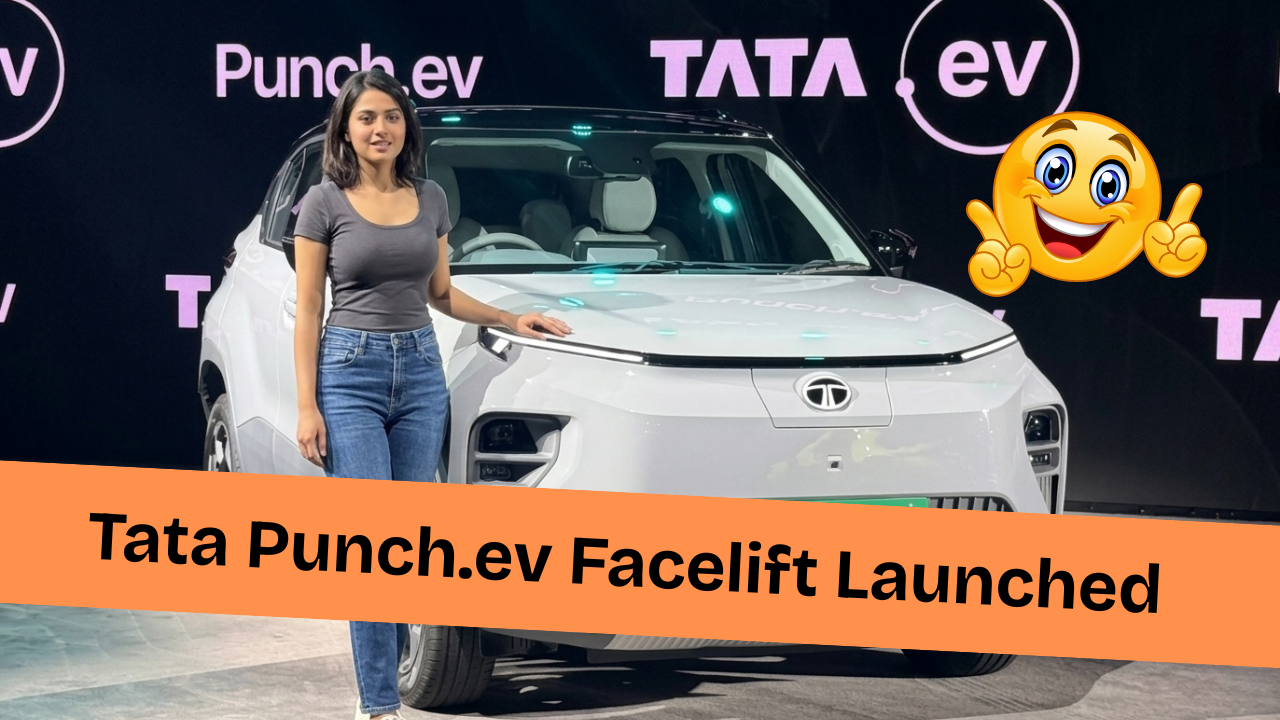
2026 Tata Punch.ev Facelift: Picture this — you drive past a petrol pump without a second glance, your monthly fuel bill has effectively become zero, and the car doing this for you costs less than a mid-range sedan. That is the promise the 2026 Tata Punch.ev Facelift is doubling down on, and this time, Tata has added enough substance to make that promise feel genuinely unbreakable. Since its original launch, the Punch.ev has quietly become the car that proved budget EVs and premium features are not mutually exclusive in India. This facelift does not just refresh the formula — it rewrites it entirely with a brand-new 16-in-1 E-drive system, ventilated seats that are a first in this segment, and a jaw-dropping entry price of ₹6.45 lakh under the BAAS scheme. The question every smart buyer is asking right now is: is this the best electric car deal in India in 2026? Let’s find out together.
Why the 2026 Punch.ev Facelift is a Big Deal
The original Punch.ev was a watershed moment for affordable EV ownership in India. It proved that a family in Pune, Lucknow, or Coimbatore could step into an electric car without stretching their budget into uncomfortable territory. The sales numbers backed this up — the Punch.ev became one of the fastest-selling EVs in the country almost immediately after launch.
But the Indian buyer is not a static creature. Expectations evolve rapidly, and what felt cutting-edge in 2024 can begin to feel ordinary by 2026. Tata has clearly been paying attention. This facelift is not a cosmetic refresh designed to buy time — it is a fundamental re-engineering of what the Punch.ev offers under the skin, combined with meaningful upgrades to the features that Indian families actually use every single day.
The new 16-in-1 integrated E-drive unit, a completely revised charging architecture, the inclusion of ventilated seats at this price point, and a pricing structure that now reaches down to ₹6.45 lakh under the BAAS scheme — taken together, these are not incremental updates. This is Tata Motors signalling that they are not willing to give any competitor an opening in the segment they currently own.
First Impressions: Has the Design Grown Up?
The first time you see the 2026 Punch.ev in the flesh, the change is immediately apparent. The front end has been completely reconsidered. Where the older car had a conventional face with separate design elements competing for attention, the facelift presents a much more cohesive, confident expression.
The closed-off front panel — a design signature that immediately communicates “this is an EV” — is cleaner and more deliberately sculpted than before. The centrally-mounted charging port, right in the middle of the front fascia, is a clever piece of design thinking that also has a practical benefit: it is equally accessible whether you are pulling into a charging bay nose-first or reversing in.
The new Empowered Copper colour is the one that will dominate social media timelines. It is a warm, earthy metallic shade that photographs beautifully and gives the car a premium identity that its price point would normally not suggest. It elevates the Punch.ev from “sensible purchase” to “considered choice.”
Most importantly, the car retains its 195 mm of ground clearance — a non-negotiable for a market where speed bumps are engineered for maximum vehicle damage and monsoon flooding turns city streets into temporary rivers. The commanding stance that made the original Punch.ev popular has not been compromised in the name of aerodynamic efficiency.
Exterior Details: New Face, New Confidence
Walk around the facelifted Punch.ev and the updates reveal themselves progressively. At the front, the redesigned LED daytime running light signature creates a distinctive light pattern that is recognisable even in heavy traffic. The closed grille panel integrates with the bumper far more seamlessly than the outgoing model, giving the nose a flush, premium feel.
The 16-inch dual-tone alloy wheels are a step up in visual presence, and the rugged grey cladding running across the wheel arches and side body serves a dual purpose — it reinforces the SUV identity while also providing a degree of scratch resistance for tight parking situations that every Indian city regularly presents.
At the rear, the connected LED tail lamps are the highlight. A thin LED strip links both lamp clusters across the full width of the tailgate, creating the kind of light signature that was exclusively the domain of premium European SUVs just a few years ago. Combined with the integrated roof spoiler, the rear of the 2026 Punch.ev looks genuinely sharp — not merely adequate.

One honest observation: the frunk storage space under the bonnet is small. It will comfortably accommodate your charging cables and not much else. Do not plan your luggage around it.
Interior & Cabin: Punching Above Its Weight
Step inside the facelifted Punch.ev and the first reaction is surprise — followed immediately by appreciation. Budget cars in India have a well-documented tendency to cut corners on interior quality, using hard plastics that look cheap after three months of dusty Indian roads. Tata has taken a different approach here.
The cabin uses layered textures on the dashboard and door panels that create a visual richness unusual for this price bracket. The materials are not premium in the way a Skoda or Volkswagen might claim, but they are genuinely a step above what the segment demands. The fit and finish across all panels is tight, with no visible gaps or misaligned surfaces — details that reflect manufacturing confidence.
The ventilated front seats deserve their own paragraph. For the Indian context, where cabin temperatures in a parked car can exceed 50°C on a May afternoon in Chennai or Nagpur, ventilated seats are not a luxury feature. They are a quality-of-life upgrade with a direct, measurable impact on driving comfort. The fact that Tata has brought this feature into a car starting under ₹10 lakh is a meaningful achievement — and a first in this segment.
Rear passenger space is adequate for a micro-SUV of these dimensions. Two adults can sit comfortably, and the near-flat rear floor makes the middle seat usable for shorter journeys. The boot offers practical space for daily shopping and weekend luggage, though it will not swallow the contents of an extended family road trip.
Infotainment & Tech Features
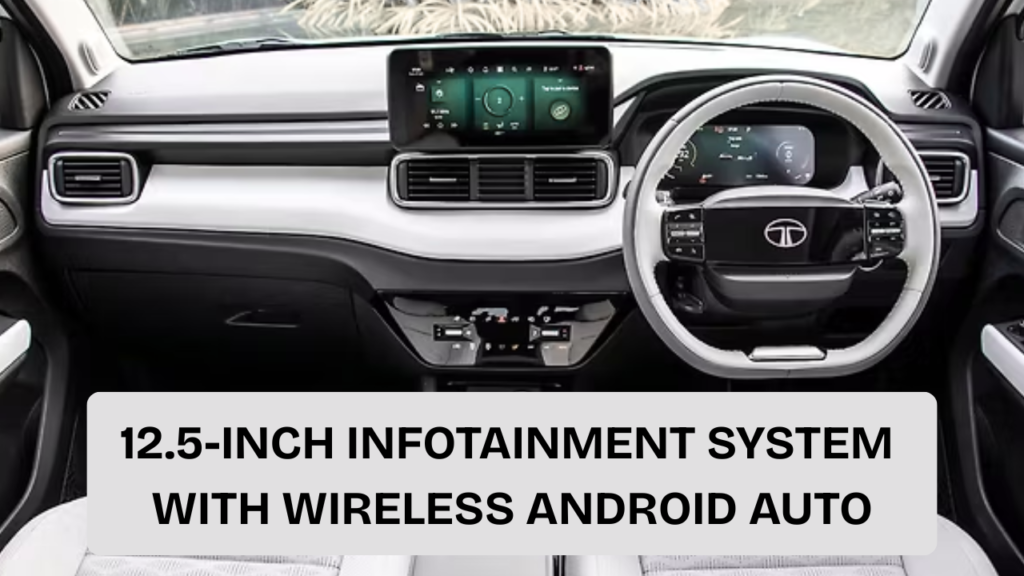
The centrepiece of the cabin is an entirely new 12.5-inch infotainment display — a significant size jump over the previous generation. The screen is crisp, responsive, and runs Tata’s latest software interface with noticeably improved fluidity. Navigation, media, vehicle settings, and the EV-specific range and charging information are all organised logically and within easy reach.
Apple CarPlay and Android Auto are supported wirelessly on the top variants, which matters more than it sounds — it means you are not hunting for a cable every time you get in the car. The system also integrates Tata’s connected car technology, offering remote monitoring, geofencing, charging status notifications, and trip data through a smartphone app.
Standout tech features:
- ETVX Smart Climate Control: A new system that optimises cabin cooling based on battery state and available energy. In practical terms, it helps balance range preservation with comfort — particularly relevant on long highway stretches where you need both.
- 360-Degree Camera: Displayed on the infotainment screen with multiple viewing angles. In India’s tight city parking situations — basement car parks, narrow market lanes, crowded residential society gates — this feature earns its keep every single day.
- Frunk Storage with Dedicated Charging Cable Compartment: The front storage space is designed specifically to house the charging cables, keeping the main boot clean and uncluttered.
- Automatic Headlamps and Rain-Sensing Wipers: Convenience features that add to the sense of a well-considered ownership experience.
The 16-in-1 E-Drive: What It Actually Means
This is the engineering story of the 2026 Punch.ev, and it deserves more than a passing mention. In the previous generation, the motor, power electronics, controller, and various electrical management units were separate components connected by wiring and brackets. In the 2026 facelift, Tata has consolidated all 16 of these functions into a single integrated E-drive unit.
The practical results of this integration are tangible:
- 50% reduction in packaging space — freeing up room that contributes to slightly improved cabin packaging and boot access.
- 16% reduction in weight — directly improving the power-to-weight ratio and contributing to better real-world efficiency.
- Fewer connection points — reducing potential failure points and improving long-term reliability.
- Improved thermal management — the integrated unit handles heat more efficiently, which translates to more consistent performance across India’s varied and often extreme temperature conditions.

This is the kind of engineering investment that does not show up in a spec sheet bullet point but makes a meaningful difference over years of ownership.
Performance: Numbers and Real-World Feel
The Long Range variant (40 kWh) produces 127 HP and approximately 190 Nm of torque, delivering a 0-100 km/h time of under 9 seconds. These are not supercar numbers, but in the real world of Indian city driving, they translate to something far more relevant: effortless, confident progress.
The instant torque delivery of an electric motor means that from a standing start at a traffic signal, the Punch.ev surges forward with an immediacy that leaves most petrol cars of the same price bracket looking flatfooted. Highway overtaking manoeuvres — particularly on national highways where the window for a safe pass can be brief — are handled with calm authority rather than anxious waiting.
Three drive modes are available:
- City Mode: Softer throttle response, optimised for fuel-sipping city driving. Ideal for Bengaluru’s stop-start traffic.
- Sport Mode: Sharpened throttle, more aggressive regenerative braking, maximum performance delivery.
- Eco Mode: Maximum range preservation, gentler acceleration profile for long highway runs.
One area worth acknowledging honestly: the Punch.ev is not built for driving enthusiasm. The steering is light and comfort-oriented, and the suspension prioritises ride quality over dynamic precision. For Indian roads and Indian buyers who use this car predominantly as a city commuter, this is the correct calibration. Just do not expect the mountain ghats to be exciting.
Real-World Range: The 468 km Claim vs. Reality
Tata’s claimed figures are based on ARAI testing cycles, which are inherently more optimistic than daily driving conditions in Indian cities and highways.
| Battery & Condition | Claimed Range | Estimated Real-World Range |
|---|---|---|
| 30 kWh — City Driving (AC on) | 365 km | ~260–280 km |
| 30 kWh — Mixed City + Highway | 365 km | ~240–260 km |
| 40 kWh — City Driving (AC on) | 468 km | ~340–365 km |
| 40 kWh — Mixed City + Highway | 468 km | ~320–340 km |
| 40 kWh — Pure Highway (100 km/h) | 468 km | ~290–310 km |
The honest takeaway: the 40 kWh Long Range variant is the one to buy if you intend to use the Punch.ev for anything beyond pure city commuting. At approximately 340 km of realistic mixed-use range, it comfortably handles most weekend road trips from major Indian cities — Pune to Goa, Delhi to Jaipur, Bengaluru to Mysuru — with a single charge and a comfortable buffer.
For a pure city commuter covering 40–60 km per day, even the 30 kWh Standard Range variant offers more than a week of driving on a single charge when topped up at home overnight.
Charging: Fast, Faster, and Fastest
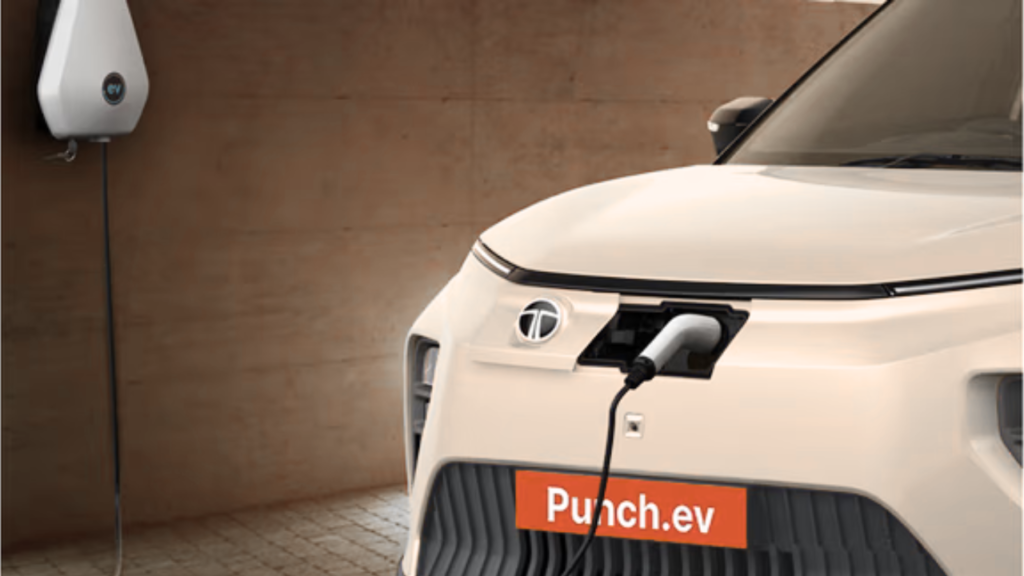
The 2026 Punch.ev facelift brings a revised charging architecture that makes top-ups significantly faster and more convenient.
| Charging Type | Speed | Result |
|---|---|---|
| Standard Home AC (3.3 kW) | Slow | Full charge overnight (~12–13 hrs for 40 kWh) |
| Fast Home AC (7.2 kW) | Moderate | Full charge in ~6 hours |
| DC Fast Charge (50 kW) | Fast | 20% to 80% in 26 minutes |
| DC Quick Top-Up | Very Fast | 135 km of range in 15 minutes |
The DC fast-charging capability is the headline number: 26 minutes from 20% to 80% is genuinely usable on a road trip. Timed with a meal stop at a highway dhaba or a coffee break, you are back on the road without any meaningful delay. The 15-minute top-up for 135 km is ideal for those unexpected moments when you arrive somewhere with lower range than planned.
Tata’s own Starcharge network, alongside third-party networks like Statiq, BPCL’s Jio-bp, and Adani charging, continues to expand rapidly across Indian highways and urban centres, making the Punch.ev’s charging ecosystem increasingly practical outside major metros.
Safety Features
Safety has always been a Tata Motors strength, and the facelifted Punch.ev continues this tradition. The full safety suite includes:
- 6 Airbags — dual front, side, and curtain airbags across all seating positions.
- 360-Degree Surround View Camera — essential for urban manoeuvring and parking.
- Electronic Stability Program (ESP) with traction control.
- Hill Hold Control — prevents rollback on inclines, critical for hilly cities like Pune, Shillong, or Shimla.
- ISOFIX Child Seat Mounts — a standard inclusion that responsible families will appreciate.
- Automatic Emergency Braking (on top variants).
- Tyre Pressure Monitoring System (TPMS).
- 3-Point Seatbelts for All Passengers including the rear middle seat.

The Punch (ICE) earned a 5-Star Global NCAP rating, and the Punch.ev is built on the same platform with the same structural philosophy. While the EV-specific crash test rating is pending for this facelift, the underlying safety DNA is already proven.
Price & Variants: The BAAS Game-Changer
Tata has structured the 2026 Punch.ev pricing in a way that removes virtually every barrier to entry.
| Variant | Battery | Price (Ex-showroom) |
|---|---|---|
| Smart (Standard Range) | 30 kWh | ₹9.69 Lakh |
| Smart+ (Standard Range) | 30 kWh | ₹10.49 Lakh |
| Adventure (Long Range) | 40 kWh | ₹11.49 Lakh |
| Empowered (Long Range) | 40 kWh | ₹12.09 Lakh |
| Empowered+ S (Long Range) | 40 kWh | ₹12.59 Lakh |
The BAAS Scheme: The Real Story
The Battery as a Service (BAAS) scheme is where the Punch.ev becomes genuinely disruptive. Under BAAS, buyers pay for the car without the battery upfront, bringing the entry price down to ₹6.45 lakh (ex-showroom) — placing the Punch.ev in direct competition with petrol hatchbacks that offer a fraction of the features and technology.
The battery is then leased on a per-kilometre basis at ₹2.60 per km. For a buyer covering 1,000 km per month, that is ₹2,600 in monthly battery cost — still likely cheaper than petrol for the equivalent distance, and with the flexibility to revisit the arrangement as EV infrastructure and battery technology evolves.
This is a bold and well-considered ownership model that lowers the psychological and financial barrier to EV adoption for first-time electric car buyers across India.
2026 Tata Punch.ev Facelift Full Specifications
| Feature | Standard Range (30 kWh) | Long Range (40 kWh) |
|---|---|---|
| Battery Capacity | 30 kWh | 40 kWh |
| Maximum Power | 82 HP (61 kW) | 127 HP (95 kW) |
| Maximum Torque | 114 Nm | 190 Nm |
| 0-100 km/h | ~13.5 Seconds | Under 9 Seconds |
| Claimed Range (ARAI) | 365 km | 468 km |
| Real-World Range (Est.) | ~250–270 km | ~330–360 km |
| Fast Charge (20–80%) | ~26 Minutes (DC) | ~26 Minutes (DC) |
| Ground Clearance | 195 mm | 195 mm |
| Wheel Size | 16-inch Dual-Tone Alloys | 16-inch Dual-Tone Alloys |
| Boot Space | 366 Litres | 366 Litres |
| Infotainment | 12.5-inch Touchscreen | 12.5-inch Touchscreen |
| Key Features | 360° Camera, Ventilated Seats, Frunk | 360° Camera, Ventilated Seats, ETVX Climate |
| Safety | 6 Airbags, ESP, Hill Hold, ISOFIX | 6 Airbags, ESP, Hill Hold, ISOFIX |
| Price (Ex-showroom) | From ₹9.69 Lakh | From ₹11.49 Lakh |
| BAAS Entry Price | ₹6.45 Lakh | Available |
Punch.ev vs Key Rivals
| Feature | Tata Punch.ev (LR) | MG Windsor EV | Citroen eC3 | Tata Tiago.ev |
|---|---|---|---|---|
| Battery | 40 kWh | 38 kWh | 29.2 kWh | 24 kWh |
| Claimed Range | 468 km | 460 km | 320 km | 315 km |
| Power | 127 HP | 136 HP | 57 HP | 74 HP |
| 0-100 km/h | ~9.5 sec | ~8.9 sec | ~16 sec | ~11.5 sec |
| Ground Clearance | 195 mm | 185 mm | 180 mm | 165 mm |
| Ventilated Seats | ✅ Yes | ✅ Yes | ❌ No | ❌ No |
| 360° Camera | ✅ Yes | ✅ Yes | ❌ No | ❌ No |
| SUV Stance | ✅ Yes | ❌ Crossover | ❌ Hatchback | ❌ Hatchback |
| Starting Price | ₹9.69 Lakh | ₹13.50 Lakh | ₹11.50 Lakh | ₹8.49 Lakh |
| BAAS Option | ₹6.45 Lakh | ❌ No | ❌ No | ❌ No |
The competitive picture is favourable for the Punch.ev. It offers the highest claimed range in its segment, the only BAAS pricing scheme, a genuine SUV stance with 195 mm ground clearance, and the segment-first ventilated seats — all at the most accessible price point. The MG Windsor comes closest in features but costs significantly more and lacks the SUV ground clearance. The Tiago.ev undercuts on price but cannot match the Punch.ev on any performance or feature metric.
Frequently Asked Questions (FAQs)
What is the real-world range of the 2026 Tata Punch.ev?
The Long Range 40 kWh variant delivers approximately 330–360 km in mixed city and highway driving conditions. On pure city use with AC, expect closer to 340–365 km. The Standard Range 30 kWh variant delivers around 250–270 km in real-world mixed driving.
What is the BAAS scheme and is it worth it?
BAAS (Battery as a Service) allows you to buy the Punch.ev without the battery for ₹6.45 lakh and then pay ₹2.60 per km for battery usage. For buyers covering under 1,200 km per month, the total cost of ownership under BAAS can be lower than owning the battery outright, especially in the first few years.
Does the 2026 Punch.ev have ventilated seats?
Yes — the 2026 Punch.ev facelift is the first car in this segment to offer ventilated front seats. For Indian summers where cabin temperatures are extreme, this is one of the most practically impactful feature upgrades Tata has made.
How fast can the Punch.ev charge?
Using a DC fast charger, the Punch.ev can go from 20% to 80% in 26 minutes. A 15-minute quick top-up on a DC charger adds approximately 135 km of range — enough to make a road-trip charging stop painless.
Which variant of the 2026 Punch.ev should you buy?
If you drive more than 60 km daily or plan any intercity trips, go for the 40 kWh Long Range variant. The real-world range jump over the 30 kWh is significant enough to justify the price difference. The Empowered trim offers the best balance of features and value within the Long Range lineup.
Is the Punch.ev suitable for highway driving in India?
Yes, with the 40 kWh battery. The fast-charging network along major Indian highways (NH48, NH8, NH44) has expanded considerably, and the 26-minute fast charge window aligns well with a natural break stop. Plan your charging stops before starting long journeys and range anxiety becomes a non-issue.
Final Verdict
The 2026 Tata Punch.ev Facelift is the most complete budget electric car in India today, and it is not particularly close. The combination of a segment-first ventilated seat, a 16-in-1 E-drive system that genuinely improves efficiency, a 468 km claimed range in the Long Range variant, and a starting price of ₹6.45 lakh under BAAS creates a package that no rival currently matches across all dimensions simultaneously.
Two honest caveats worth keeping in mind: the frunk is more symbolic than practical, and real-world range will always fall short of Tata’s ARAI-certified figures — plan around 330–350 km, not 468. Both of these are minor in the context of what the car delivers overall.
If you are a first-time EV buyer in an Indian city looking for a rugged, well-featured, affordable electric SUV — the Punch.ev facelift is the obvious answer. If you are already a Punch.ev owner from the first generation, the 16-in-1 E-drive upgrade and ventilated seats alone make the upgrade conversation worth having.
In the budget EV segment in India, Tata just reset the benchmark — again.